

How to Choose the Right Arcade Machine for Your Business
1. Start With Your Target Customers
The catalogues of most arcade manufacturers look interchangeable. What separates a machine that earns from one that occupies floor space is whether the people who walk past it actually stop. So the first question is not which machine is popular — it is who is going to put money into it.
Four audience groups behave differently enough that they justify different equipment. They differ in how long a single play takes, who makes the spending decision, and whether they come back.
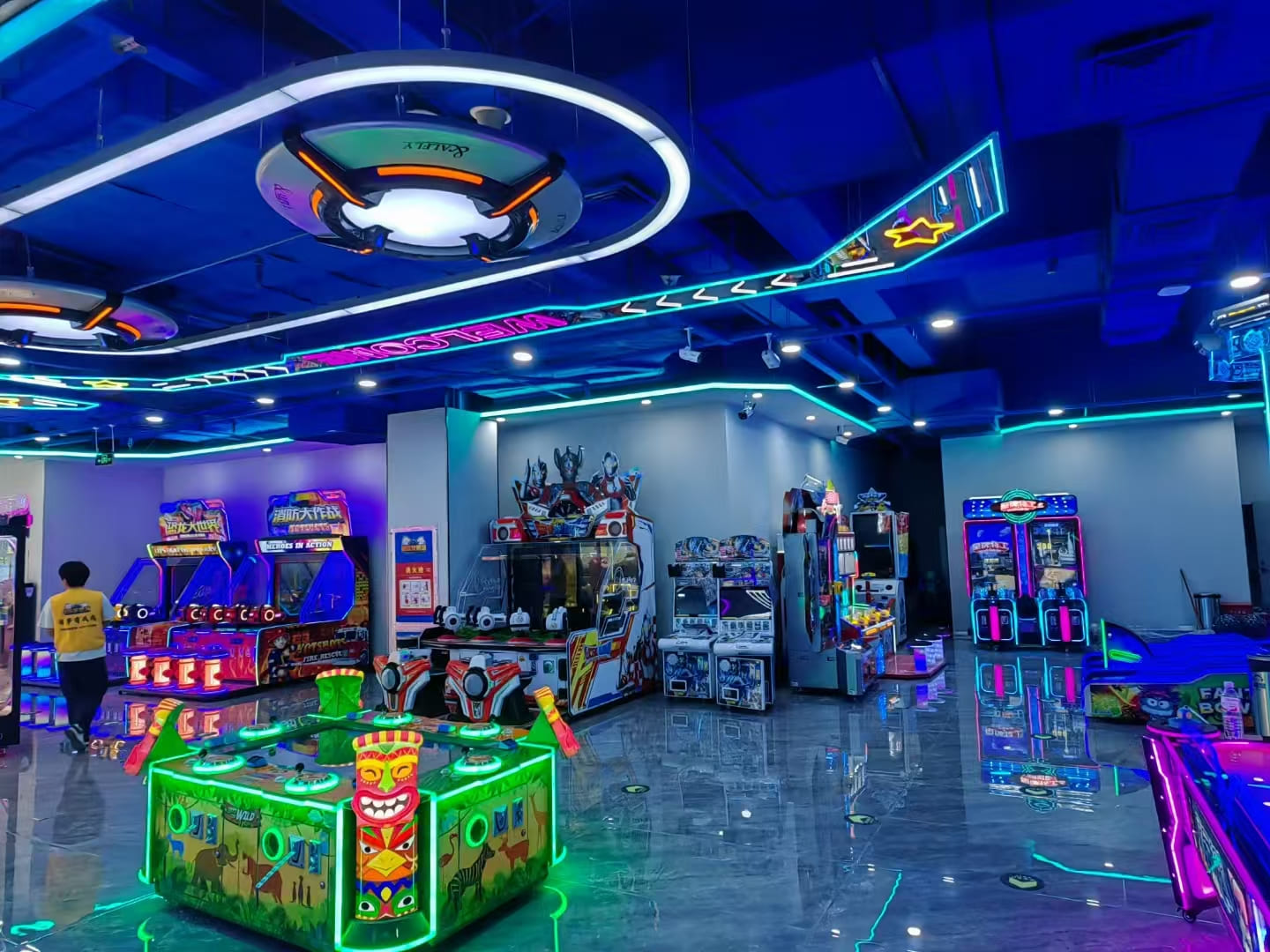
Children and Families
Children play short rounds and repeat them, but the adult beside them controls the money and judges the venue on things that have nothing to do with gameplay: whether they can see the machine from where they are standing, whether the area is clean, whether anything looks sharp or unstable. Machines that work in this segment — kids arcade games, children's rides, claw machines, mini driving games, simple reaction and skill games — are the ones a parent can read from several metres away.
Cabinet height matters more here than in any other segment. A machine built for adults puts its controls out of reach and its screen above the eyeline of a six-year-old. The kids cabinet in the comparison table below is 127 cm tall for exactly this reason.
Teenagers
Teenagers buy competition, not content. They will play the same game repeatedly if there is a number to beat and someone watching. Boxing strength testers, basketball arcade machines, racing games, shooting games, and any multiplayer format do well here, and the scoreboard does as much work as the machine — a visible leaderboard or a ranking display extends the life of a game long after the novelty wears off.
Young Adults
This group pays for immersion and for the social version of it. Racing simulators, boxing machines, basketball and shooting games all work; what makes them work is that a group can do it together and compare immediately afterwards. Machines here can be larger, because the experience is the product.
Mixed-Age Venues
Most real venues are mixed, and a single-category floor plan leaves money on the table: a family that has finished with the kids' zone needs somewhere to go next, and a teenager who came with younger siblings needs a reason to stay. A workable spread covers prize, skill and competition in the same room, roughly in the proportion of your actual footfall rather than an even split across categories.
2. Match the Machine to Your Venue Type
The same cabinet performs differently depending on what the surrounding venue is already doing for it. Before comparing machines, decide what job this one has to do.
Family Entertainment Center
An FEC needs breadth more than depth. Claw machines, kids games, racing machines, basketball and interactive attractions each pull a different member of the same family group, and the venue earns from the group staying rather than from any single play. Breadth also spreads risk: when one category goes quiet, others carry the floor.
Shopping Mall
Mall footfall is passing traffic, and passing traffic decides in about three seconds. Machines earn here through visibility — height, lighting, movement, and gameplay legible from a distance. Compact cabinets also matter, because mall space is priced per square metre and the lease will outlast the machine. One constraint buyers routinely miss: mall units often have limited electrical capacity and restricted access hours for servicing, so confirm both before you choose a machine that needs a technician inside it.
Arcade or Game Center
A dedicated arcade can carry a full mix — skill games, racing, shooting, prize machines, basketball, boxing, multiplayer attractions. The objective is to give people a reason to keep moving through the room rather than to finish one machine and leave, which means alternating high-attention anchor machines with cheap, quick plays between them.
Bar or Adult Entertainment Venue
Boxing, racing and competitive sports games suit adult venues; children's equipment does not. Two things decide whether a machine survives here: footprint, because bar floor is already committed to tables, and noise, because a machine with loud attract-mode audio will be switched off by staff within a week.
3. Measure the Space You Actually Have
The most common ordering mistake is buying against cabinet dimensions and discovering the real requirement on delivery day. Four things occupy floor space, not one:
Cabinet footprint + player space + circulation + service access.
A racing simulator needs room for players to get into and out of the seat, not just the cabinet outline. A boxing machine needs clear space around the punching arc. A claw machine has a small footprint but still needs somewhere for a player to stand, and for the people waiting behind them.
Two measurements get missed most often:
Height, and what has to be moved through. The cabinets in the table below run from 127 cm to 290 cm. A standard interior doorway is roughly 200–210 cm high — a 185 cm claw machine passes upright, a 235 cm boxing machine does not. If your route includes a standard door, a lift or a corridor with a low soffit, measure the narrowest point on the route before ordering, not the machine bay.
Ceiling clearance at the final position. Basketball machines stand 240–260 cm. That fits most commercial ceilings, but the constraint is usually what hangs below it — lighting track, sprinkler heads, ductwork, signage. Measure to the lowest obstruction.
Before placing an order, confirm: cabinet width, depth and height; doorway and corridor dimensions on the delivery route; ceiling height at the final position; clear floor in front of the machine; walkway width; and where the nearest socket is.
4. Choose Games Based on the Experience You Want
Picking machines one at a time produces a floor of unrelated cabinets. It is more useful to decide what each machine is meant to make the customer feel, then buy to that.
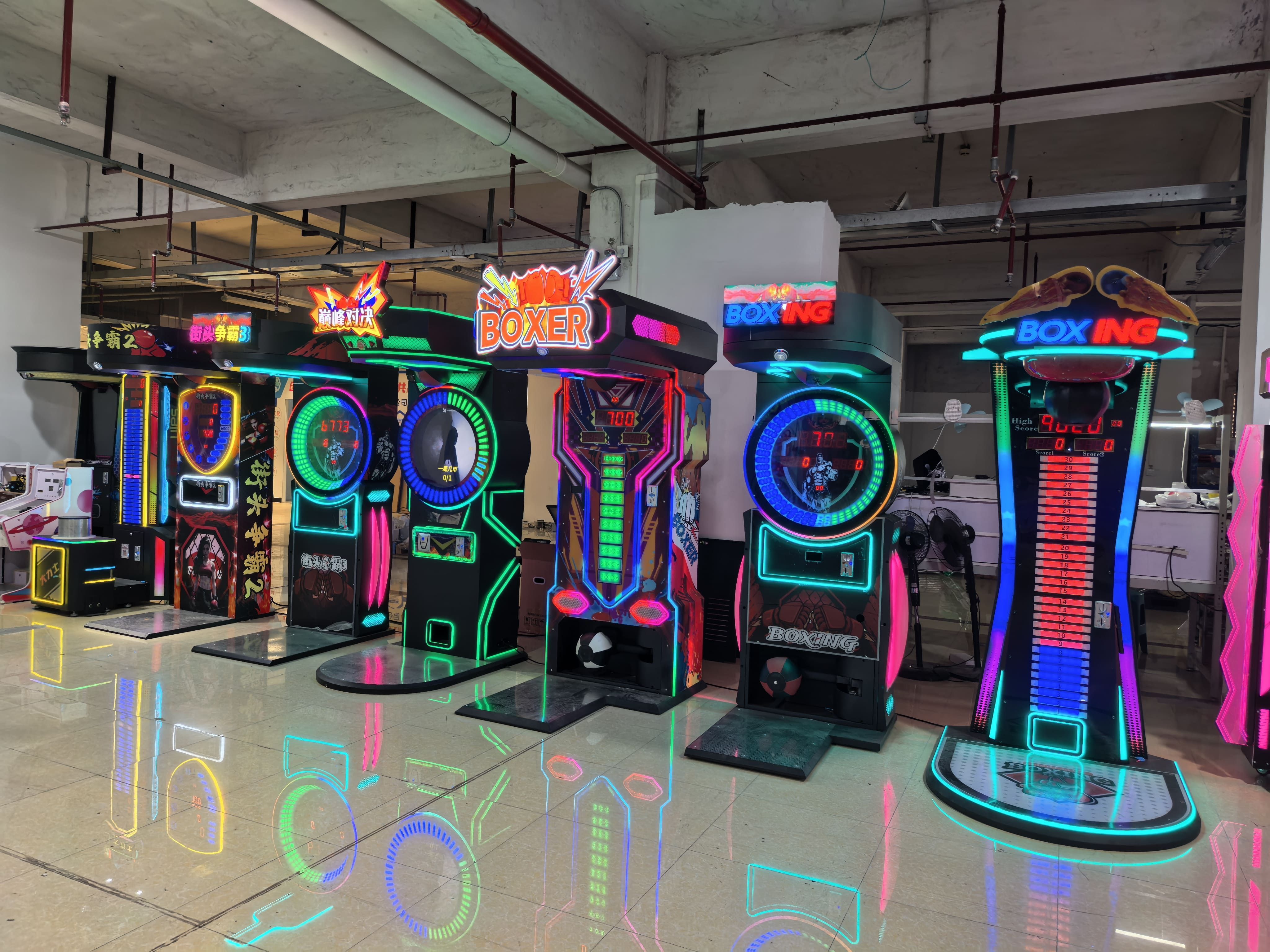
Boxing Machines: Competition and Physical Interaction
A boxing strength tester is one punch, one number, and an immediate reason to try again. Nobody needs to be taught how to use it, which is why it works on passing traffic, and the score is comparable between strangers — a group of four will queue without being invited to.
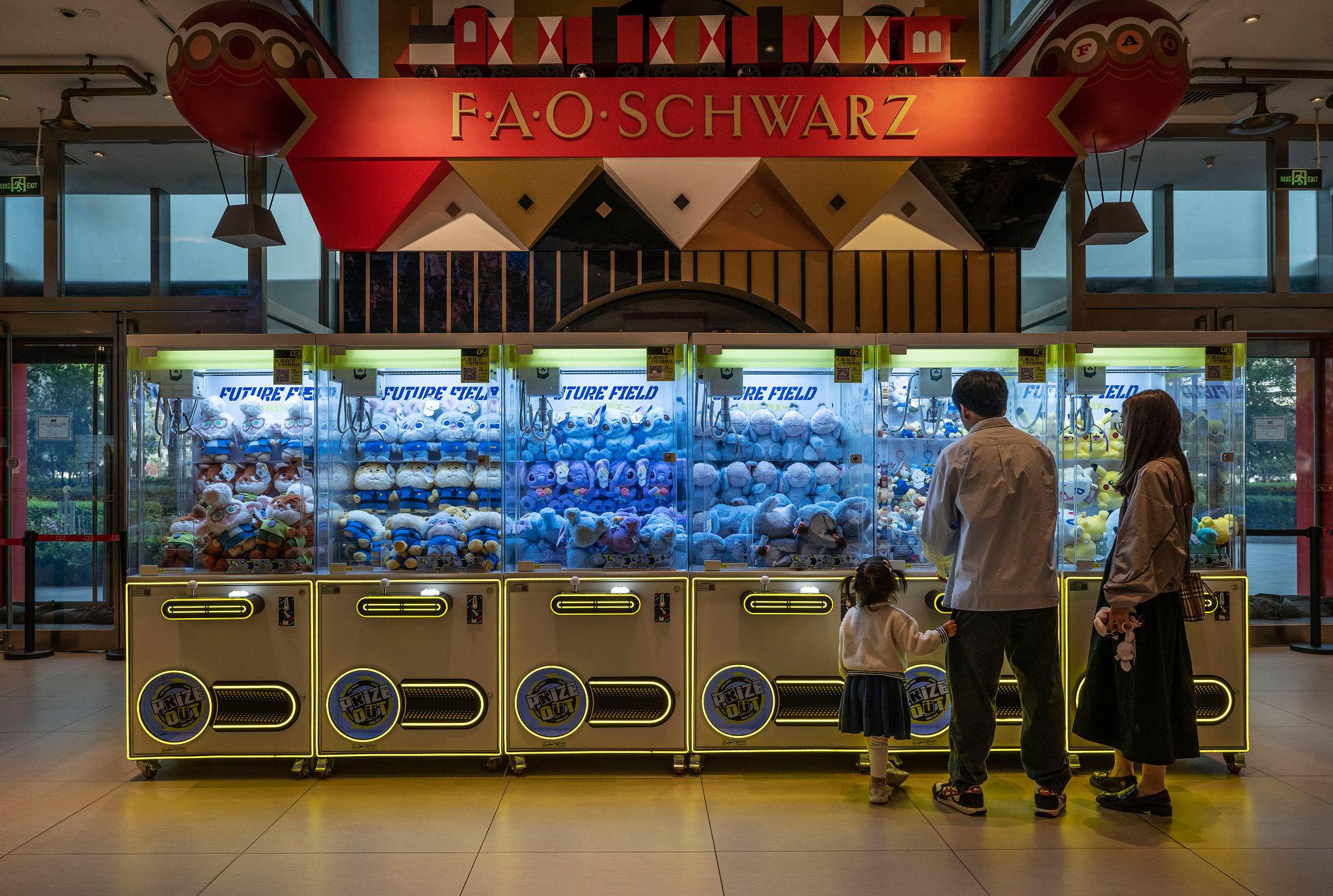
Claw Machines: Prize and Anticipation
Claw machines sell the moment before the result, not the prize. The visible stock does the marketing, the near-miss does the repeat business, and the operator controls the difficulty directly through claw strength settings — which makes this the most tunable revenue machine on most floors.
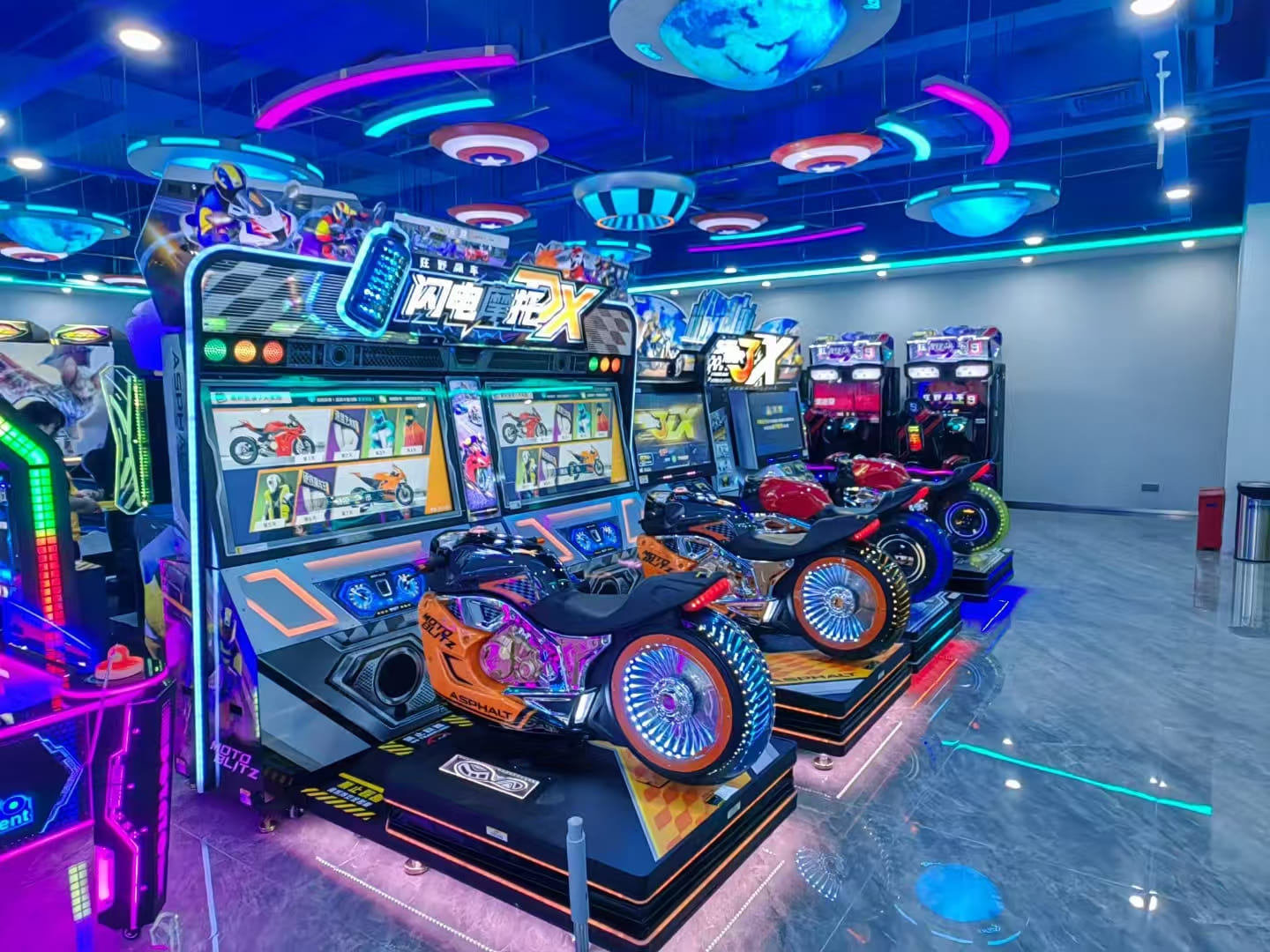
Racing Machines: Immersion and Social Competition
Racing simulators are the heaviest commitment on this list in both floor and capital, and they earn it through session length: a player occupies the seat for several minutes rather than several seconds. They suit teenagers, young adults and groups, and they need the largest clear area around them for entry and exit.
Basketball Machines: Skill and Replayability
Basketball combines speed, accuracy and visible physical effort. Players compete against their own last score as readily as against another person, which gives the machine a long life without new content. It needs a shooting lane in front of it — plan roughly 2 m of clear floor ahead of the cabinet plus 1–1.5 m of walkway behind the player — so the space requirement is substantially larger than the footprint suggests.
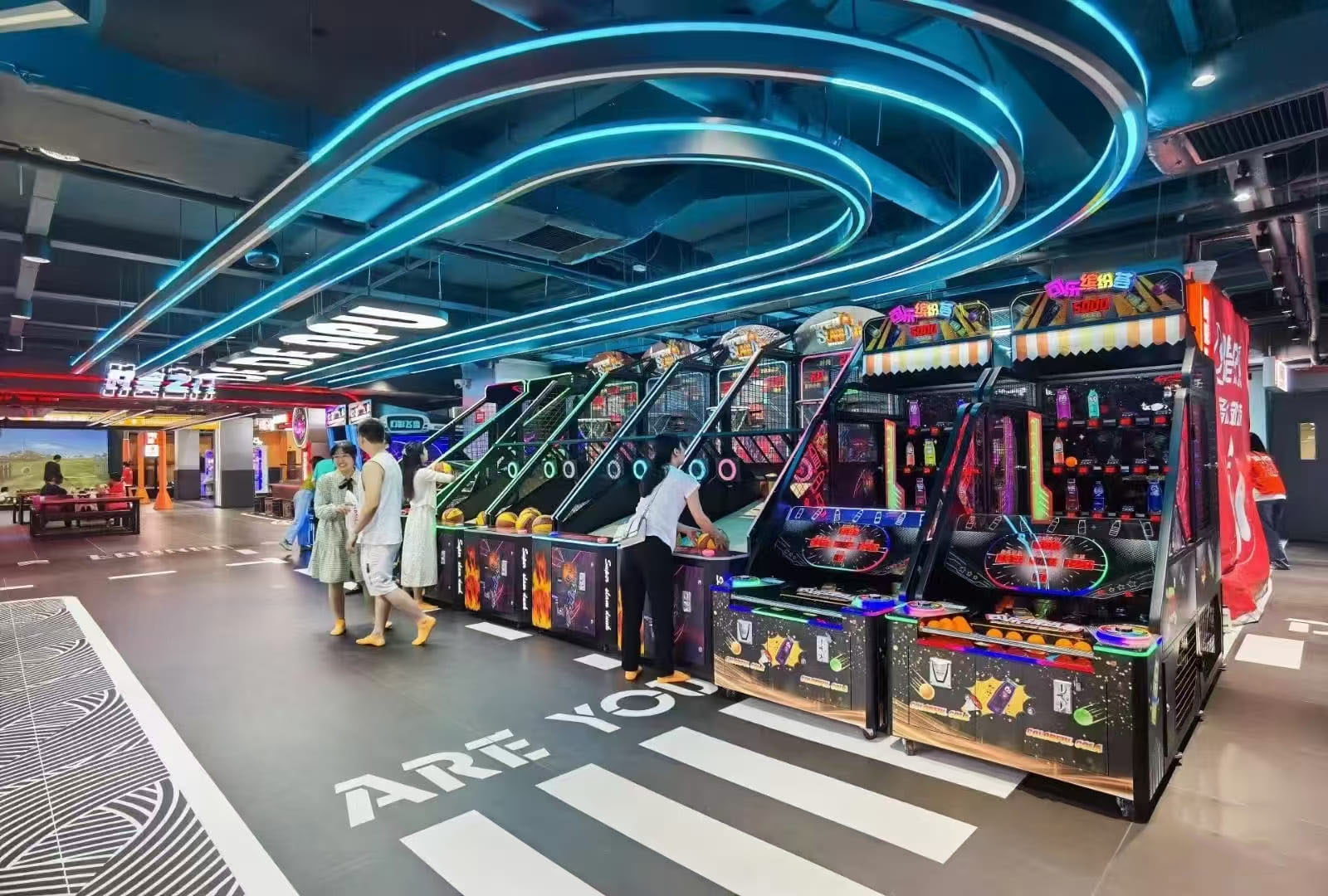
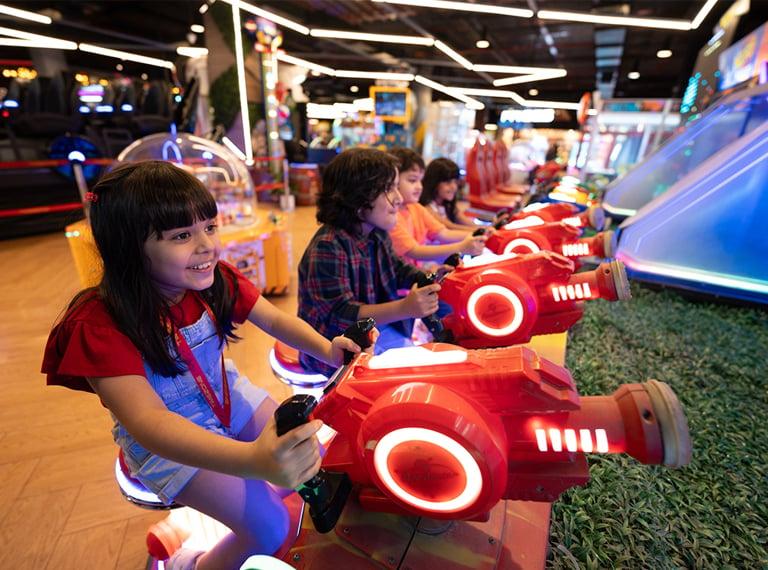
Kids Arcade Games: Family Engagement
Children's machines keep the youngest visitors occupied while the adults who pay stay on the premises. The relevant design criteria are control height, rounded edges, and legible graphics, not game depth.
These five categories are five different reasons to play. A floor built from one of them competes with itself; a floor built from three covers a family group end to end.
5. What Each Square Metre Has to Earn
Once you know what fits, the useful comparison is not purchase price but floor efficiency. These are the published dimensions of machines currently in production at our factory:
| Machine type | Footprint (W × D) | Floor area | Height | Players | Area per player | Rated power |
|---|---|---|---|---|---|---|
| Kids mini cabinet | 55 × 55 cm | 0.30 m² | 127 cm | 1 | 0.30 m² | 100 W |
| Standard claw machine | 78.5 × 85 cm | 0.67 m² | 190 cm | 1 | 0.67 m² | 100 W |
| 4-player claw machine | 65 × 85 cm | 0.55 m² | 185 cm | 4 | 0.14 m² | 150 W |
| Boxing strength tester | 140 × 80 cm | 1.12 m² | 235 cm | 1 | 1.12 m² | 100 W |
| Two-player basketball (folding) | 100 × 245 cm | 2.45 m² | 240 cm | 2 | 1.23 m² | 200 W |
| Twin racing simulator | 288 × 256 cm | 7.37 m² | 290 cm | 2 | 3.69 m² | 200 W |
Footprint figures are the cabinet outline only and exclude player standing space, circulation, and service access. Power figures are manufacturer-rated values, not measured draw. Dimension axis order is as published on each product page.

Read the area-per-player column, and the spread is about 26×, from 0.14 m² to 3.69 m². That single ratio explains most layout decisions: a venue with expensive, constrained floor space fills it with multiplayer prize machines, and a venue with cheap space can afford anchor attractions that occupy a lot of it.
The 4-player claw machine is the clearest case. Four separate standard claw cabinets would occupy about 2.67 m² and draw 400 W at rated power. One four-player cabinet occupies 0.55 m² and draws 150 W — the same four player positions for roughly a fifth of the floor and under 40% of the rated power.
That does not make the four-player machine the right answer everywhere. A row of four single machines spreads players across a wider frontage and lets four people play without waiting, which matters in a venue where queueing is itself a problem. The point is that the trade-off is now a number rather than a preference.
6. Set a Realistic Budget
Machine price is the smallest part of what a commercial order actually costs. Budget for: machine cost, customization, packaging, freight, insurance, import duty, local delivery, installation, spare parts, payment system hardware, and an allowance for maintenance in the first year.
Freight is where a cheap quotation stops being cheap. A machine quoted at the factory gate can be undercut by a higher-priced machine once container space, duty, and inland delivery are added — and the comparison is only meaningful if both suppliers quote the same delivery term. Ask which Incoterm the price is built on: EXW, FOB, CIF or DDP. Comparing an EXW price against a CIF price is not a comparison.
Two costs are specific to importing and easy to omit. Duty is assessed against an HS classification — coin-operated arcade games are commonly classified under 9504.30, though the correct code depends on the machine and the destination country, and it changes the duty rate. Have your broker confirm the code before shipment rather than after. Second, ask for the container loading figure: how many units fit in a 20GP and a 40HQ. Freight per unit moves more than any other line once you know that number.
We cover the full cost model, including fit-out, staffing, and working capital, in How Much Does It Cost to Open an Arcade?
7. Decide How Much Customization You Actually Need
Full custom development is the most expensive way to solve a problem that is often cosmetic. There are three levels, and they are not close in cost or lead time.
Standard Machine
Bought as the manufacturer builds it. Shortest lead time, lowest cost, and the specification has already been produced and tested. If a catalogue machine meets your requirements, this is the correct answer.
Modified Machine
The cabinet and game system stay as designed; selected elements change — artwork, branding, lighting, payment system, screen, control layout, cabinet colour. This is where most projects should sit. It gives a venue its own look without paying for engineering, and it does not restart any compliance testing that depends on the electrical assembly.
Fully Custom Machine
A new cabinet or system developed to your requirements — concept, engineering, prototype, testing, then production. Development cost and timeline are substantially higher, and the certification work has to be repeated for the new assembly in most markets. Custom development makes sense when the machine itself is the attraction, not when the venue simply needs its logo on the side.
The question worth asking before commissioning anything: which parts of this machine have to be different for the business to work? Everything beyond that list is cost and calendar time. Development budgets and timelines are covered in How Much Does It Cost to Develop a Custom Arcade Machine?
8. Look Beyond the Purchase Price
A machine that costs less and fails earlier is not cheaper. Commercial buyers are purchasing an income-producing asset with a service life, so the relevant question is what it costs to keep earning for six years.
Component Quality
Ask what is inside: the screen and its panel grade, the PC or control board, buttons, joysticks, sensors, motors, speakers, and lighting. These are the parts that fail, and they are the parts a low quotation reduces first. Ask for brand and model, not a category.
Cabinet Construction
Steel thickness is the least visible and most consequential specification on a cabinet. Ours is built from 1.2 mm steel where the market standard is closer to 0.6–0.8 mm. A cabinet that flexes eventually cracks at the seams, and the failure shows up a year after installation, not in the factory.
Ask also how the machine is maintained: which panels open, from which side, and whether the side that opens has to stay clear. A machine whose service panel faces a wall becomes a machine that does not get serviced.
Testing Before Shipment
Every unit we ship runs a 72-hour continuous ageing test before it is released. That is long enough to catch the failures that appear in the first days of operation rather than in the customer's venue, which is the only place a machine failure is genuinely expensive.
Translate this into money before you compare quotations. A cabinet with a two-to-three-year service life has to be bought twice inside a six-year horizon — the second purchase plus freight, plus the weeks of floor earning nothing while the replacement ships. A cabinet built for four to six years is bought once. The cheaper machine is frequently the one that gets replaced.
Spare Parts and Warranty
Ask which consumable parts you will actually need — claw mechanisms, sensors, buttons, belts, displays — whether they are stocked, and how they are shipped when you need them. Then establish what the warranty covers in writing: which components, for how long ([待填:保修期,月]), and what happens when a part fails in month four.
9. Check Compliance Before You Compare Prices
Certification is not a value-add on imported amusement equipment; it is the entry condition. A shipment that arrives without the right documentation is not a machine with a paperwork problem; it is a machine sitting at port accruing demurrage.
What applies depends on where the machine is going:
European Economic Area — CE marking, supported by a technical file. Depending on the machine, this rests on the Machinery Directive 2006/42/EC, the Low Voltage Directive 2014/35/EU and the EMC Directive 2014/30/EU. RoHS (2015/863) restricts hazardous substances in electronics.
United States — FCC Part 15 for electromagnetic emissions, and UL or ETL listing for electrical safety. There is no single federal mandate for UL on amusement machines, but most state and local electrical codes require it, and commercial insurers generally will not write a policy without it.
United Kingdom — UKCA marking, in place of CE. Confirm current transitional arrangements with your importer.
Australia / New Zealand — RCM marking.
Machines accessible to children — additional assessment in several markets, EN 71 in the EU and child-safety provisions under CPSC rules in the US.
ASTM F24 is the recognised design, manufacturing and inspection standard for amusement equipment in North America and is routinely requested by insurers, even where it is not legally required for a given machine.
What matters as much as the certificate is whether it is real. A supplier saying "CE certified" is not evidence. Ask for the Declaration of Conformity naming the specific directives, the test reports behind it, and the issuing lab's accreditation. For UL, ask for the file number and look it up — a supplier who will not give you the number is usually not listed. Confirm the certificate covers the exact model and voltage configuration you are buying; a certificate for one variant does not carry over to another.
Our current certification set is CE / FCC / RoHS / UKCA. Ask us for the documents before you ask for the price.
10. Ask the Manufacturer the Right Questions
A catalogue shows the product. It does not show how a supplier behaves when something goes wrong, which is when it matters. These questions separate the two, and the value is often in how the answer is hedged rather than what it says.
| Ask | An answer you can work with | An answer that should worry you |
|---|---|---|
| Where is the machine built? | A named facility, with production photos and a willingness to video-call the line | "We work with several factories" |
| What components are used? | Brands and model numbers for screen, board, sensors, motors | "High quality components" |
| How is it tested? | A named procedure and duration — ours is 72 hours continuous per unit | "Inspected before shipping" |
| What is the lead time? | A number in days, with production and shipping stated separately | "About a month" with no breakdown |
| What certifications hold? | Declaration of Conformity, test reports, verifiable file numbers | "CE certified" and nothing else |
| What payment systems are supported? | Coin, bill, card, and cashless options named, with the hardware specified | "Can be customised" |
| Are spare parts included? | A list of what ships with the order and a price for the rest | "Available if needed" |
| What does the warranty cover? | Components named, duration stated, claims process described | "12 months" with no scope |
| How is after-sales handled? | A named contact, response window, and how parts ship | "Contact our sales team" |
| Can you support repeat orders? | Confirmed ability to reproduce the same specification later | Silence on specification control |
For custom projects, add: who talks to the engineering team; how design changes are confirmed in writing; what the prototype includes; how prototype revisions are handled and charged; and what the production unit price will be at your target quantity.
11. Communication Is Part of the Purchase Decision
An arcade order carries a long list of specifications that have to be right simultaneously: cabinet, screen, controls, payment system, software language, voltage, packaging, shipping. One misunderstood line — the wrong voltage, a payment system that does not take the local currency — typically surfaces after production has started.
So treat responsiveness as part of the product. A supplier should be able to restate your requirements back to you in writing, route a technical change to engineering without it passing through three people, and tell you when something you asked for is a bad idea. Ask for a written specification sheet before deposit; it is the cheapest insurance available on an international order.
Supplier age is a weak signal on its own. What predicts a smooth project is whether the supplier understands the requirement, responds when it changes, explains technical details plainly, and is still available after the container leaves. A large manufacturer with a slow quote desk can be harder to work with than a smaller one where the person who answered your email is the person who will brief the line.
12. Think About Your Future Expansion
If the first order works, the second one should be easier than the first. That is worth establishing before you buy anything: can the supplier reproduce this exact specification twelve months from now, supply additional models, build new cabinet designs, and keep shipping parts for the machines you already have?
If you are opening more than one site, standardisation pays twice. Compatible machines and shared spare parts across venues cut both inventory and training, and a consistent fleet means a technician trained at one location can work at all of them. It is also the strongest argument for treating the manufacturer as a standing partner rather than a vendor you re-tender every year.
A Practical Arcade Machine Selection Checklist
Customer
Who will play the machine, and what age groups matter most?
Does the purchase decision rest with the player or an adult beside them?
Is competition between players part of the appeal?
How long is an acceptable single play?
Venue
What is the usable floor area, and what does it cost per square metre?
What is the ceiling height at the final position, measured to the lowest obstruction?
What is the narrowest point on the delivery route — door, lift, corridor?
Is there a socket within reach, and what is the circuit capacity?
Can customers stand in front of the machine without blocking a walkway?
Business
What is the equipment budget, and does it include freight and duty?
Which Incoterm is the quotation built on?
Which payment method will the market actually use?
What certifications does the destination market require, and who holds the documents?
What does this machine have to earn per week to justify its floor?
Supplier
Is the machine manufactured in-house?
Can they show the production line, not the showroom?
What testing is performed, and for how long, per unit?
Are spare parts stocked, and what ships with the order?
What does the warranty cover, and how is a claim made?
What is the response window for a technical question?
Frequently Asked Questions
How do I choose the right arcade machine for your business?
Start with the customers who will actually play, then work through venue type, available floor space, total landed budget, and the experience you want to create. Only then compare machine categories on footprint, power, durability, maintenance access and supplier support.
What is the best arcade machine for a business?
There is no single best machine. Boxing, claw, racing, basketball, and kids machines serve different audiences and different floor economics — a claw machine occupies about 0.67 m² per player position, a twin racing simulator about 3.69 m². The best machine is the one that matches your footfall and your rent.
How much floor space does an arcade machine need?
More than the cabinet footprint. Add player standing space, circulation around the machine, and access for servicing. Published footprints range from 0.30 m² for a kids mini cabinet to 7.37 m² for a twin racing simulator, and a basketball machine needs roughly 2 m of clear floor in front of it for the shooting lane. Measure the delivery route and the ceiling at the final position as well — cabinets taller than about 210 cm will not pass upright through a standard doorway.
Which arcade machine types use floor space most efficiently?
Multiplayer cabinets. Our 4-player claw machine occupies 0.55 m² for four player positions, about 0.14 m² each, against 0.67 m² for a single-player claw machine. Boxing machines use about 1.12 m² per player and twin racing simulators about 3.69 m². If floor space is expensive, buy multiplayer; if floor space is cheap and you want dwell time, the larger machines earn their space.
How many arcade machines should I buy?
The number follows from venue size, layout and machine mix, not from a target count. A balanced layout that mixes quick-play, prize, skill and anchor machines earns more than a floor packed with one category, and it leaves room for players to move between machines rather than queue at one.
Should I buy standard or custom arcade machines?
Standard machines are the right choice when a catalogue model already fits your requirements — shorter lead time, lower cost, no new certification work. Modified machines suit most projects that need their own branding. Fully custom development is justified when the machine itself is the attraction, and it carries substantially higher cost, longer lead time and fresh compliance testing.
What certifications should arcade machines have before import?
For the EU, CE marking with a technical file covering the Machinery Directive 2006/42/EC, Low Voltage Directive 2014/35/EU and EMC Directive 2014/30/EU, plus RoHS. For the US, FCC Part 15 and UL or ETL listing. The UK requires UKCA; Australia and New Zealand require RCM. Machines accessible to children may need EN 71 assessment in the EU. Always ask for the Declaration of Conformity and the test reports behind it, and verify UL listing by file number.
What should I ask an arcade machine manufacturer?
Where the machine is built, what components are used, how it is tested and for how long, what certifications apply and whether they can be verified, production lead time, supported payment systems, whether spare parts ship with the order, warranty scope and duration, and how after-sales support works. Ask for specifics — a supplier who answers in categories rather than model numbers is a supplier you will have trouble with later.
Is a cheaper arcade machine always better for a new business?
No. Purchase price is one line in the total cost. Reliability, cabinet construction, maintenance access, spare part availability, downtime, and supplier support all affect what the machine costs to keep running. A cabinet with a two-to-three-year service life has to be bought twice inside six years, plus freight and lost floor time; one built for four to six years is bought once.
How much electricity does an arcade machine use?
Less than most venue equipment. Our standard claw machine is rated 100 W, the 4-player claw machine 150 W, and the two-player basketball machine 200 W. At rated draw, 150 W is roughly one kilowatt-hour every 6.7 hours. These are manufacturer-rated values rather than measured consumption, and they exclude start-up surge, so treat them as a planning figure and confirm against your own metering once installed.
Final Thoughts
The right machine is the one that fits your customers, your floor and your budget, and comes from a manufacturer who will still answer the phone after the container has landed.
Work through it in order: who plays, where they play, what the machine has to make them feel, and what the space has to earn. Compare landed cost against service life rather than sticker price. Confirm the compliance documentation before you confirm the order.
Most commercial venues end up with a spread — boxing, claw, racing, basketball, and kids' equipment covering different groups in the same room. The exact mix depends on your footfall, and the manufacturer is part of the decision alongside the machine.
Planning a floor or replacing part of one? Send us your floor plan, target customer mix, and destination country, and we will come back with a machine list, footprint calculation, freight estimate and the certification documents for your market. Request a layout proposal.