

About WIDIN – Engineering Commercial Arcade Machines Built for Long-Term FEC Profitability
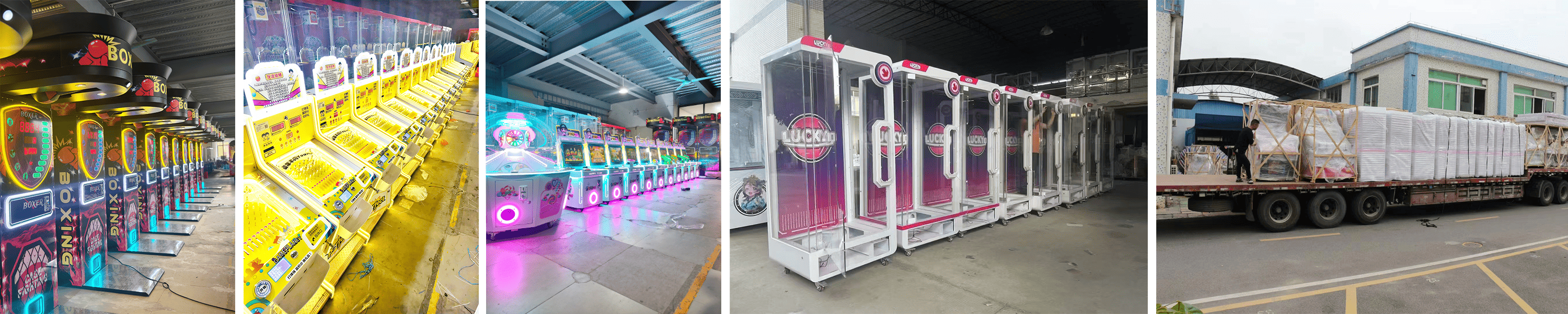
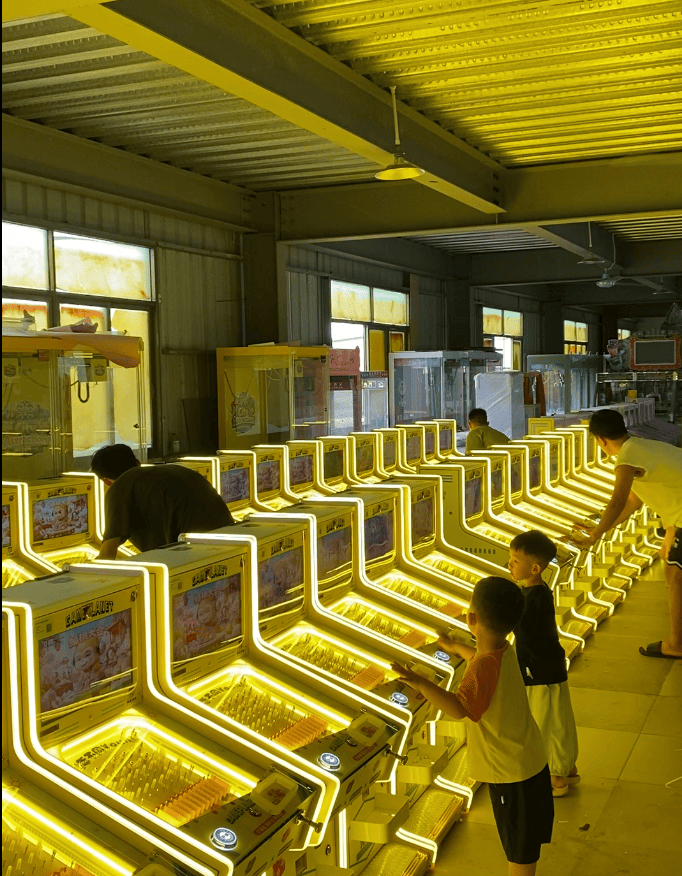
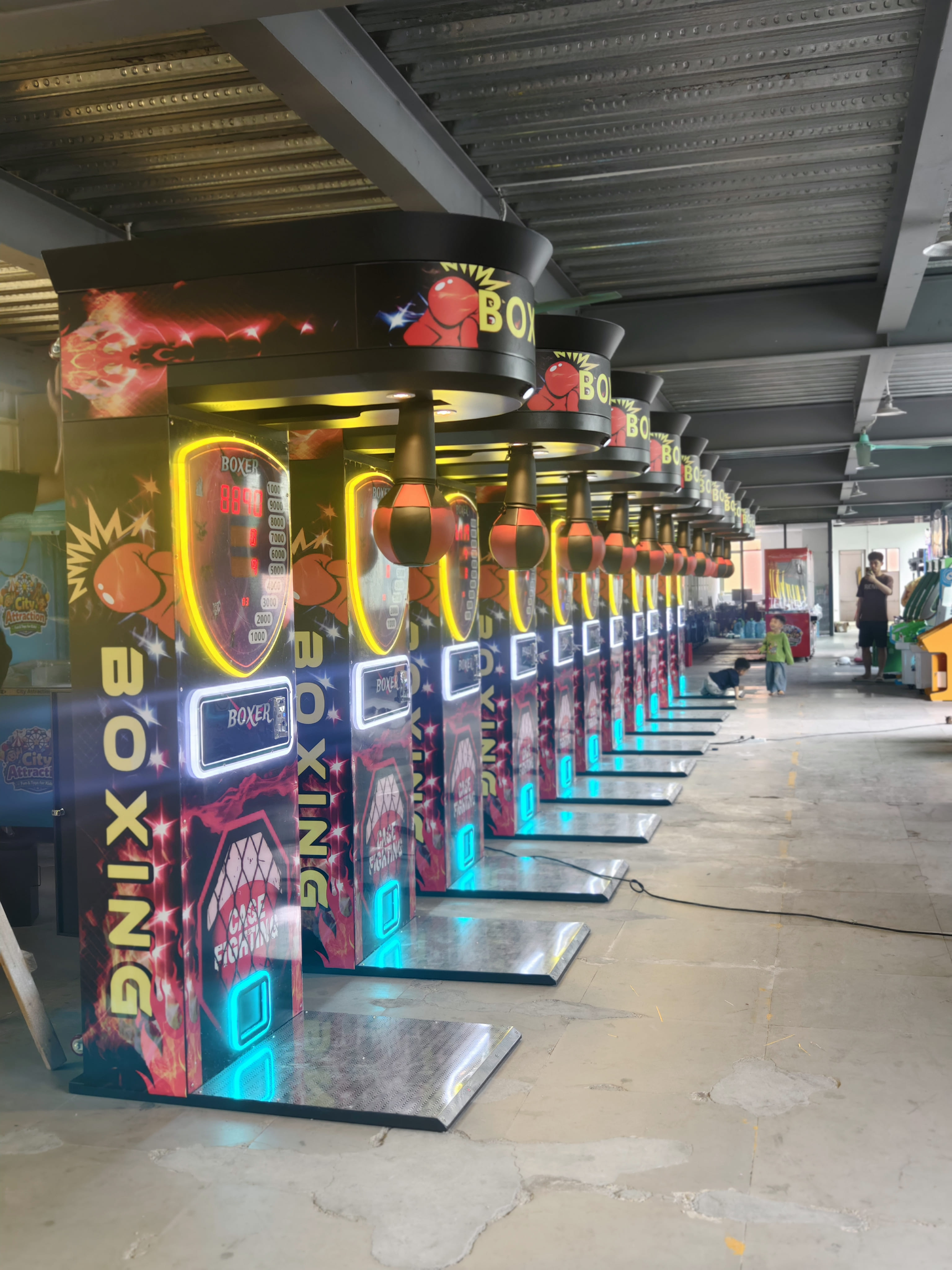
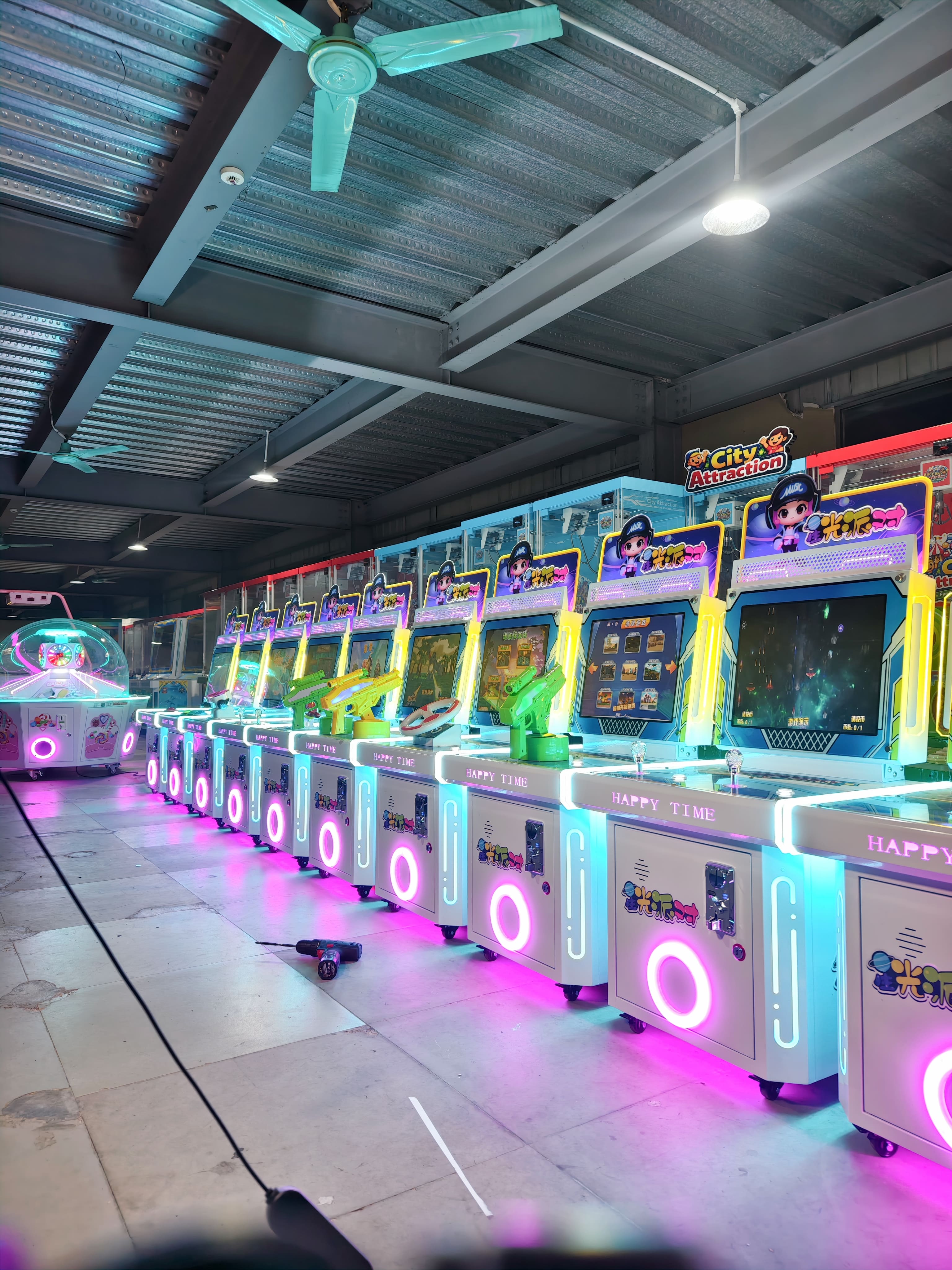
WIDIN Tech is the brand of a Guangzhou-based manufacturer of commercial arcade machines, producing cabinets for claw machines, boxing and strength testers, racing simulators, fishing games, basketball, shooting, kids' rides, and redemption games. The factory stands at No. 21 Jinkeng Road, Panyu District, Guangzhou, and runs its own steel fabrication, electronics assembly, and final testing under one roof. Its customers are family entertainment centers, shopping malls, arcade operators, and equipment distributors in Southeast Asia, Latin America, the Middle East, Europe, North America, Australia, and other regions.
This page explains how the factory is organised and why, because the organisation is the product. Six decisions run through every cabinet that leaves the floor: 1.2 mm load-bearing steel frames instead of the 0.6–0.8 mm common in the trade, in-house PCB design and firmware, a 72-hour full-load aging test on every finished unit, a four-stage powder-coating process that takes eight hours per cabinet, permanent archiving of every custom order's engineering files, and spare-parts production that does not expire when a model ages out of the catalogue. Each section below takes one of these decisions and shows what it changes on a venue floor.
Why Does WIDIN Build Cabinets Differently?
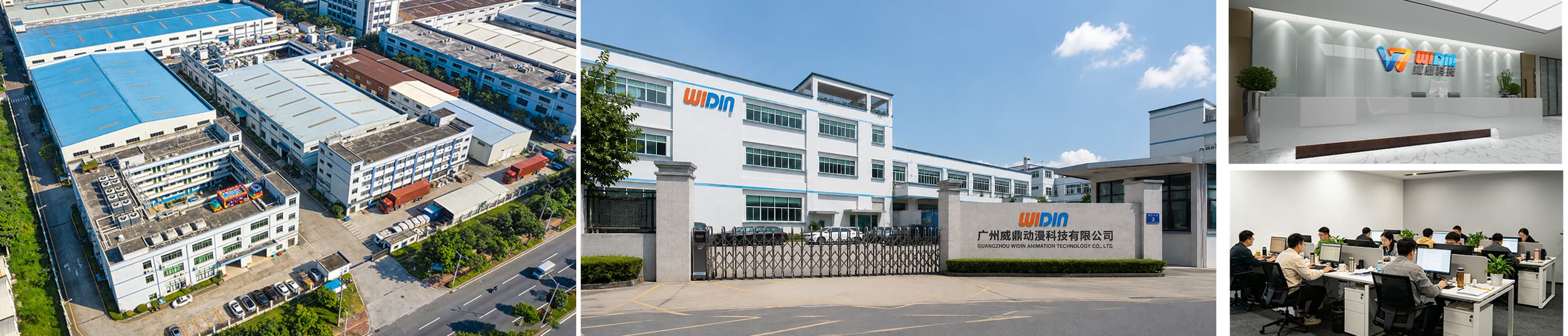
The company was founded by mechanical and electronics engineers who had spent years servicing arcade equipment for overseas operators buying from factories across China's amusement-manufacturing belt. That service work is where the product logic came from. In the fault records those engineers kept from their support years, most 80% of the failures they were called to trace back to how a machine was built — thin panels that let vibration loosen connectors, generic boards never rated for continuous duty, parts discontinued by the factory that made them — not to wear or misuse by players.
A standard assembly-line factory is optimised for order turnover: generic third-party components, short functional checks, fast dispatch. That model works for one-time wholesale transactions. It works badly for a venue that runs its machines 12–16 hours a day, all year, because the costs that model hides — intermittent shutdowns, untraceable wiring, unavailable spares — arrive after the warranty and land on the operator. WIDIN's production decisions are based on total cost of ownership rather than factory throughput, and the sections below state those decisions plainly.
Why Does Steel Thickness Decide How Long a Cabinet Lasts?
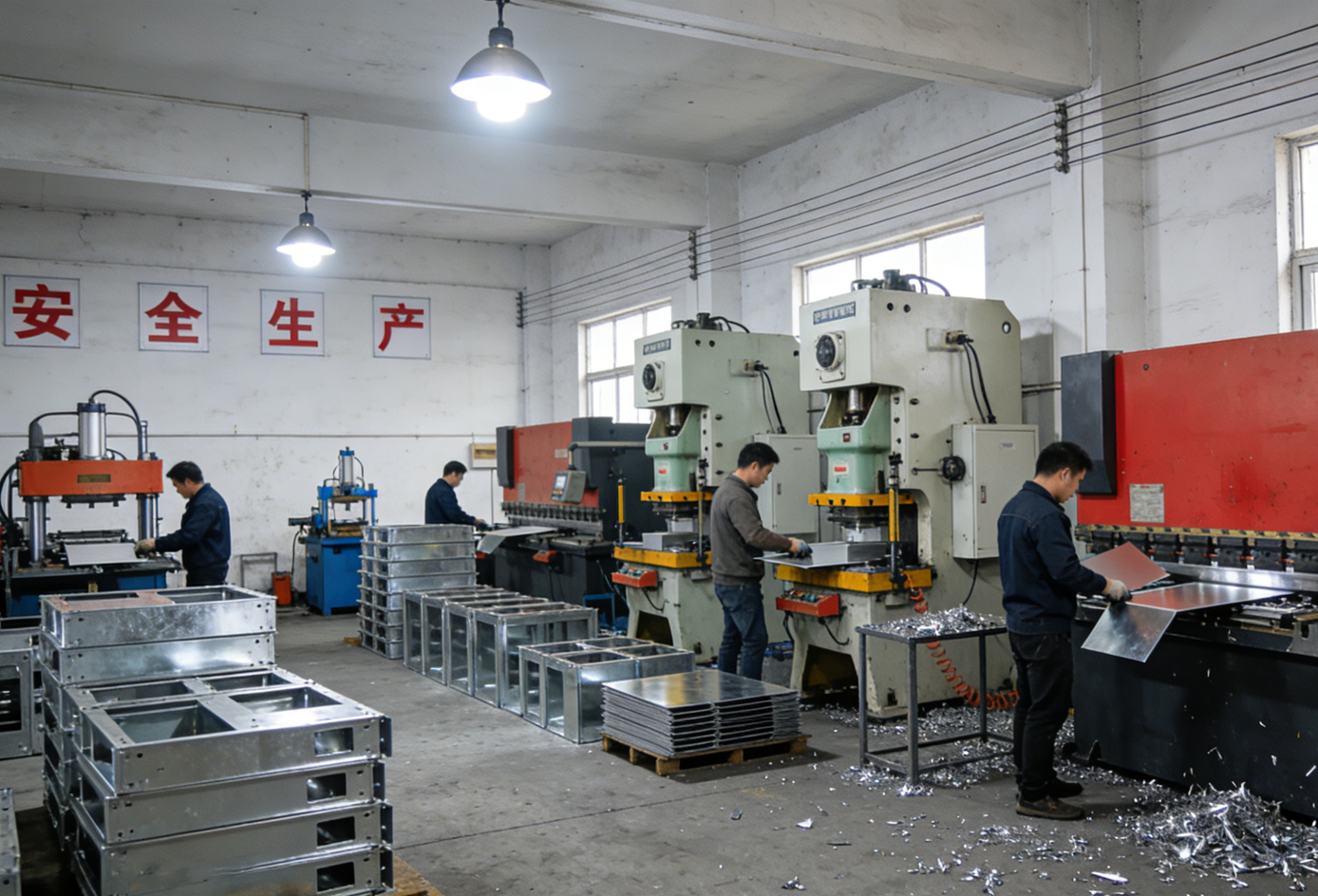
Cabinet framing in this industry is commonly 0.6–0.8 mm cold-rolled steel. The savings are real—roughly 15–20% on raw material per cabinet—and that is why the practice persists. The cost is also real, and it arrives at the venue. Thin panels resonate during gameplay, and months of that vibration work wiring harnesses, sensor connectors, and motor mounts loose, producing the intermittent shutdowns that are hardest to diagnose because nothing is visibly broken. Thin panels also deform under the impact a commercial cabinet takes daily, which misaligns control panels and prize doors and turns maintenance staff into realignment staff.
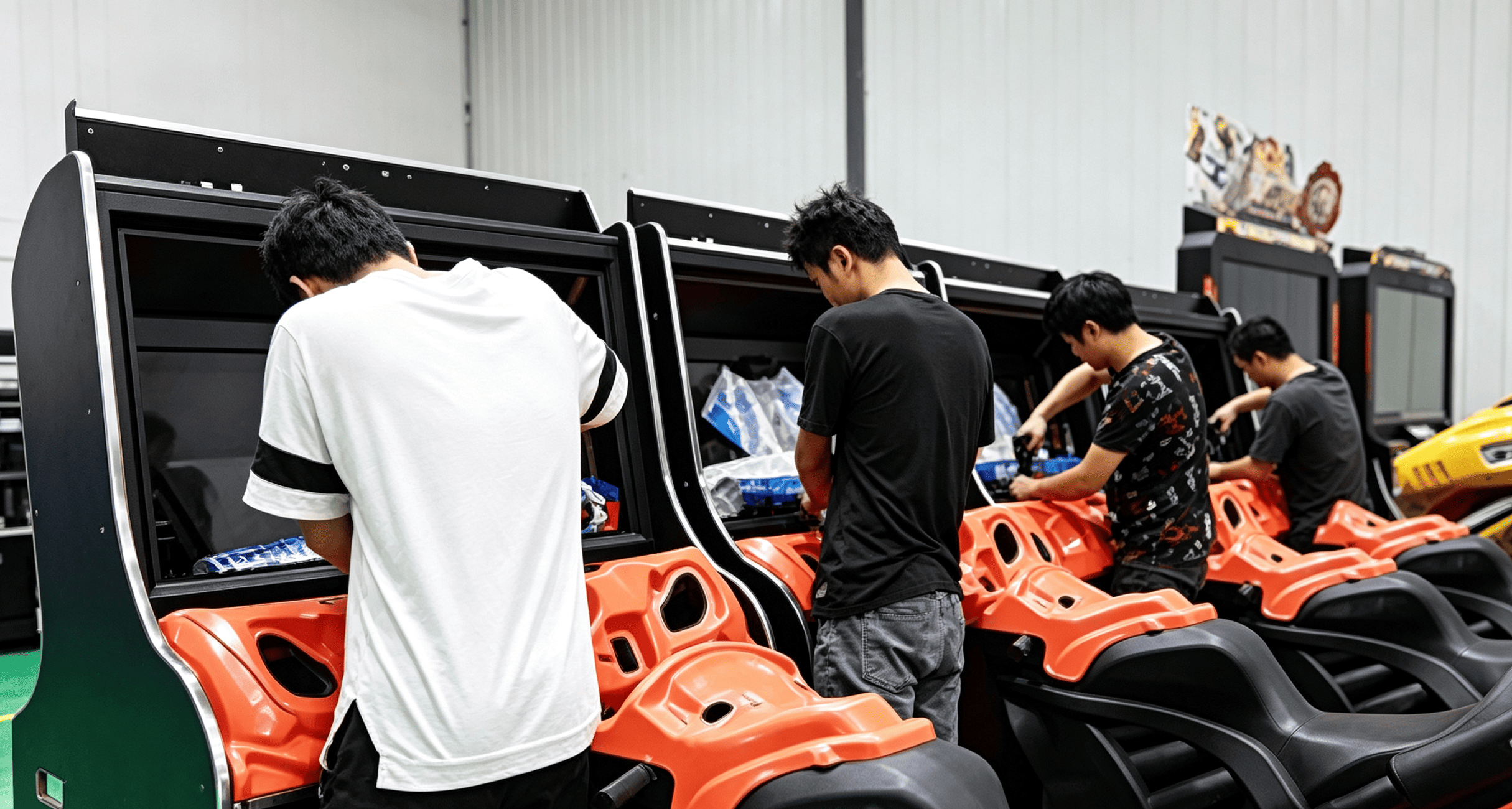
WIDIN uses 1.2 mm reinforced cold-rolled steel for all load-bearing structures across its commercial arcade machines. A rigid frame holds every internal component in a fixed position, which removes the vibration-loosening fault category instead of managing it. It also keeps the cabinet square over years of use, so the alignment a machine leaves the factory with is the alignment it still has in year four.
Structure is half of the lifespan equation; the surface is the other half. The trade default is a single-layer spray finish, which fades, peels and corrodes within 6–12 months in humid mall air or inside a container crossing the ocean. WIDIN runs a four-stage process instead — degreasing, phosphate anti-rust pretreatment, electrostatic primer bonding, and a weather-resistant topcoat. It adds about eight hours of processing per cabinet and keeps the finish intact through 3+ years of commercial operation, which matters more than it sounds: on a machine that earns by attracting players from across a hall, a peeling cabinet earns less every month it goes untreated. Edges are polished and rounded to public-venue mechanical safety practice.
Why Does WIDIN Design Its Own Circuit Boards?
Most arcade manufacturers buy universal mainboards from electronics wholesalers. Those boards are engineered for intermittent home use, not for a cabinet that runs sixteen hours a day in a mall with unstable grid voltage — and they carry three limitations that show up on a venue floor: poor tolerance of voltage fluctuation, passive heat dissipation, and locked firmware that cannot adapt to regional pricing rules or gameplay habits. The symptoms are the ones operators know best: emergency shutdowns during peak hours, power-module failures, sluggish sensor response.
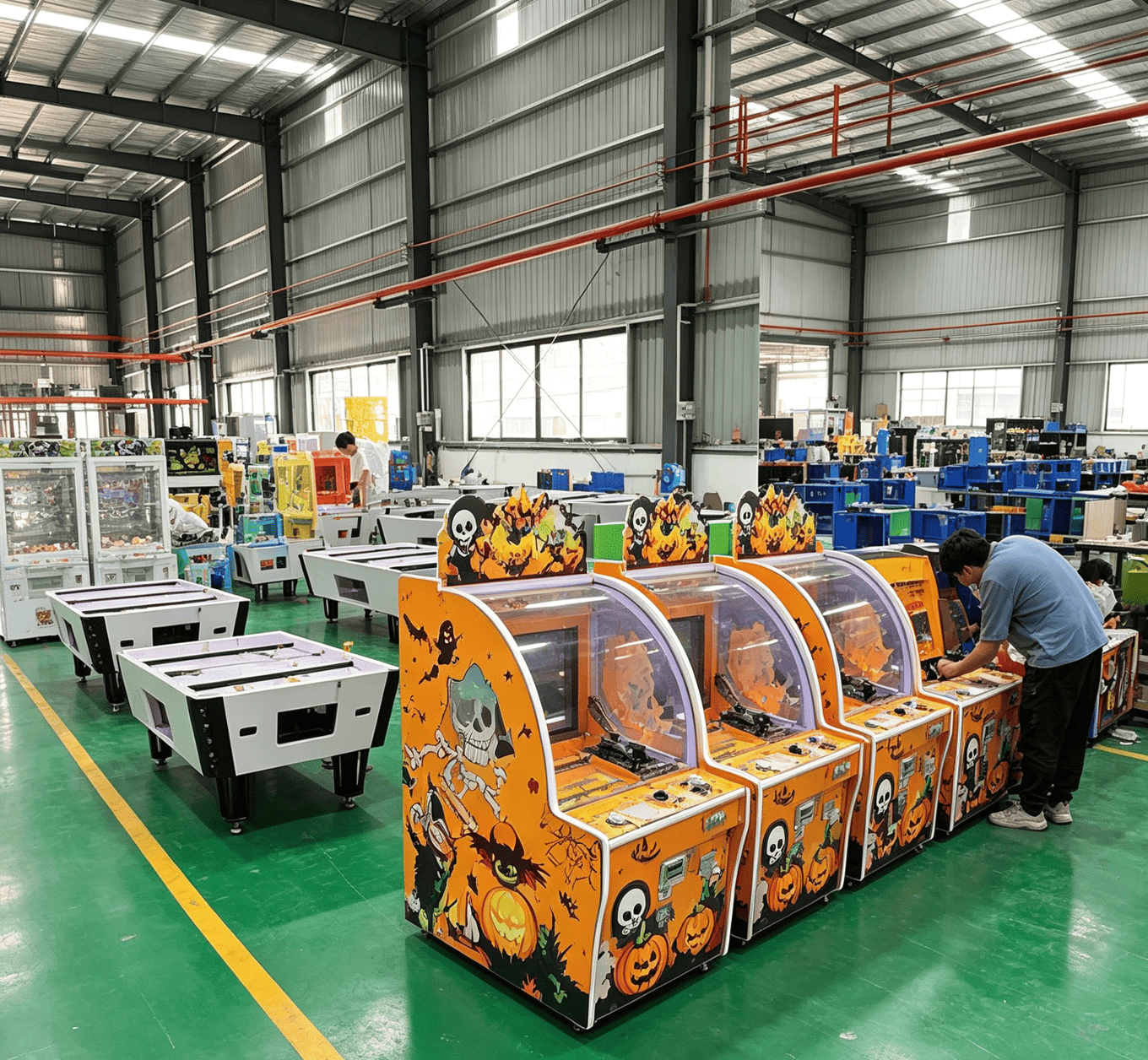
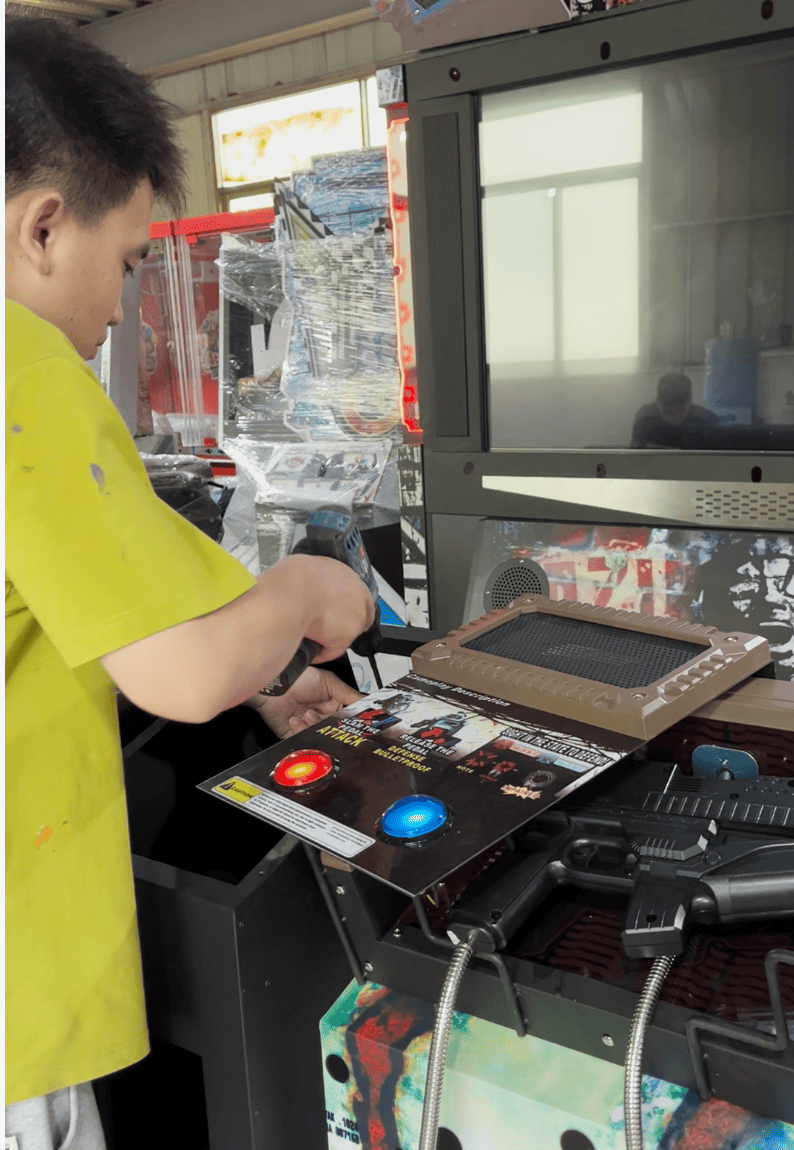
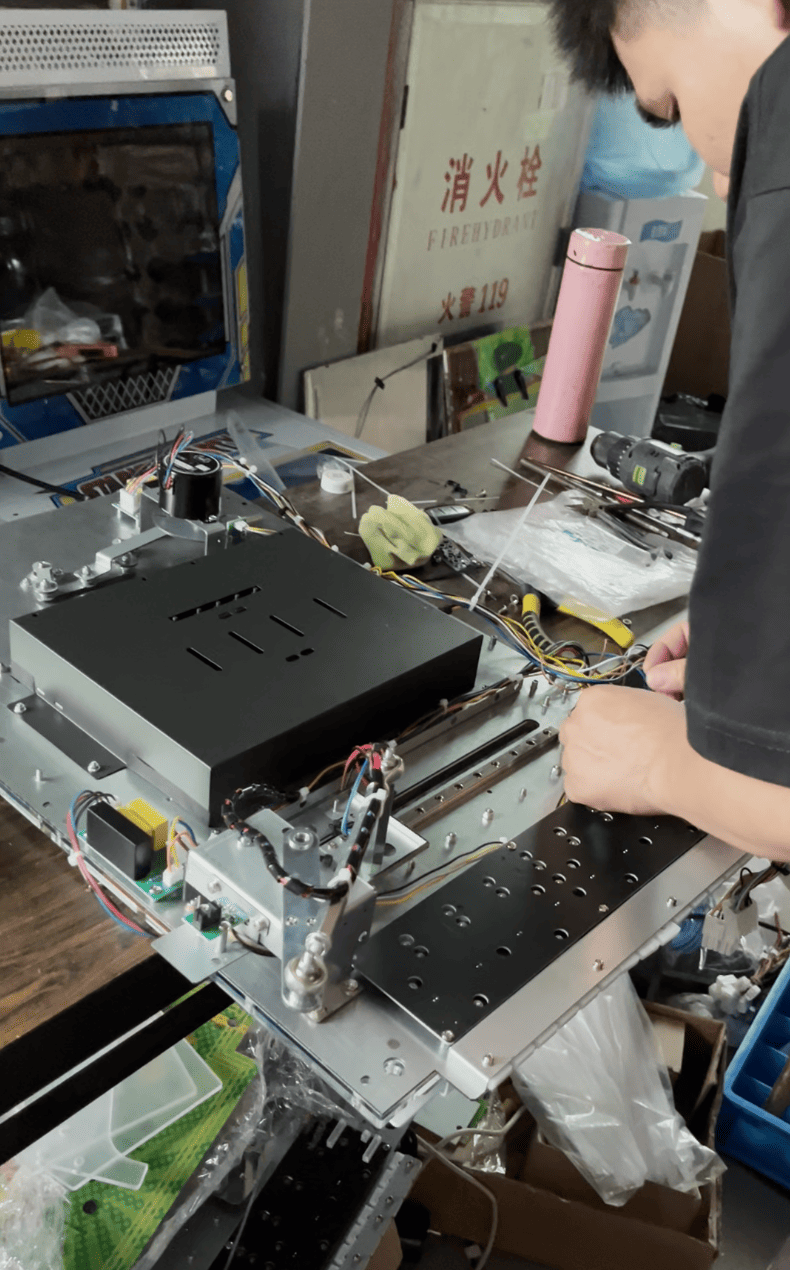
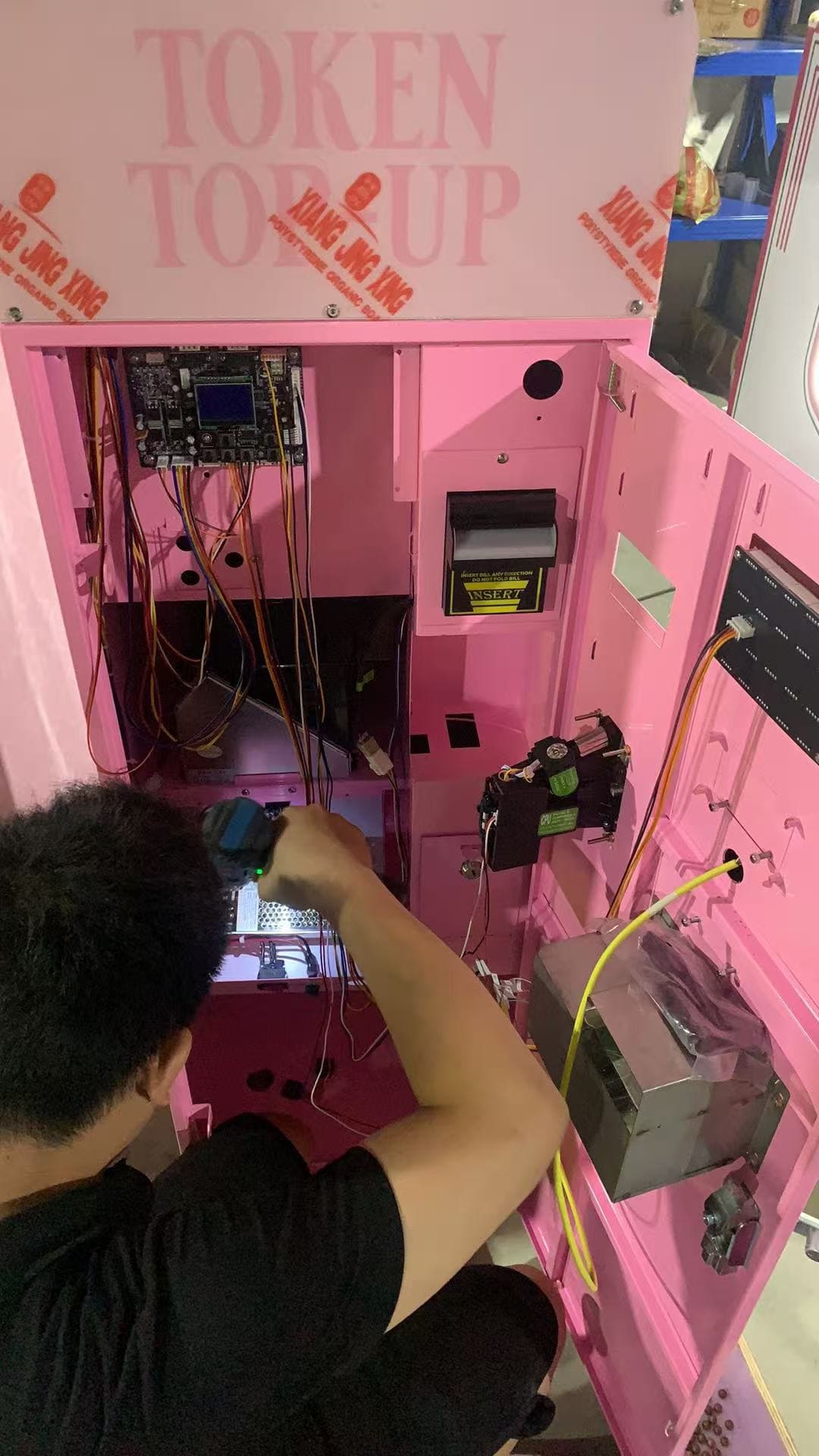
WIDIN operates an in-house electronics laboratory that designs its own arcade PCBs, writes its own firmware and calibrates the finished electronics for commercial duty. Every core board carries overvoltage protection, overcurrent cutoffs and active heat dissipation, because the board is expected to run hot, long and through dirty power. Coin recognition, ticket redemption and sensor circuits are calibrated against data from working venues rather than bench conditions, which is the difference between a machine that false-triggers on some players and one that responds the same way at hour four hundred as it did at hour one.
Because the firmware is written in-house, it is customisable where generic boards are locked. Game difficulty, ticket payout ratios, coin and token pricing rules, and multi-machine linkage are set in a backend your own staff can adjust, without a third-party technician and without waiting on the factory for a parameter change.
What Does a 72-Hour Aging Test Catch That a Power-On Check Cannot?
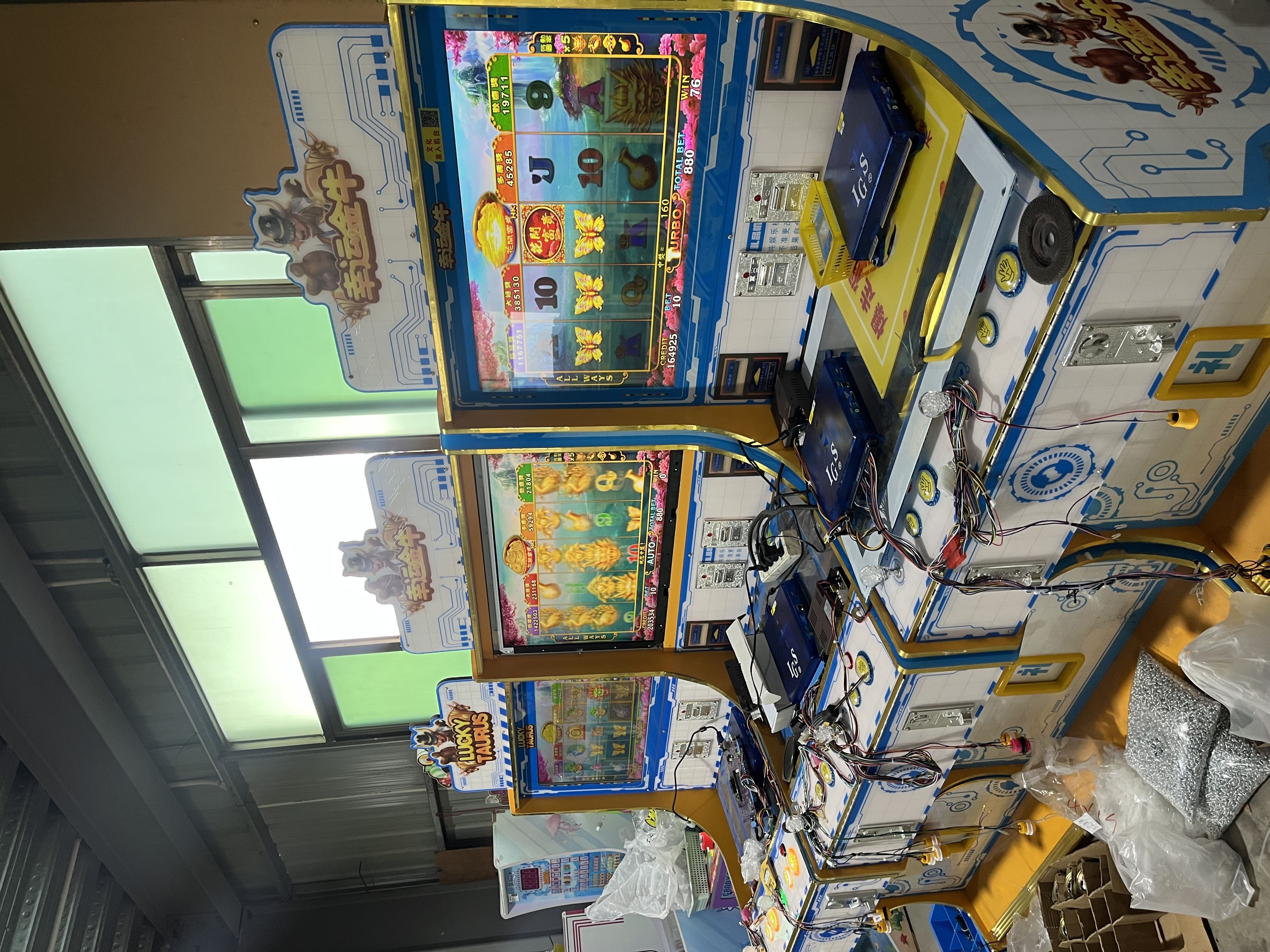
The standard pre-shipment inspection in this trade is a three-to-five minute power-on check. It verifies that a machine starts. It does not verify that a machine survives, because the faults that actually shut cabinets down — thermal fatigue, component drift, cumulative mechanical wear — only surface after hours of continuous cyclic operation, and they surface during peak revenue hours when they are most expensive.
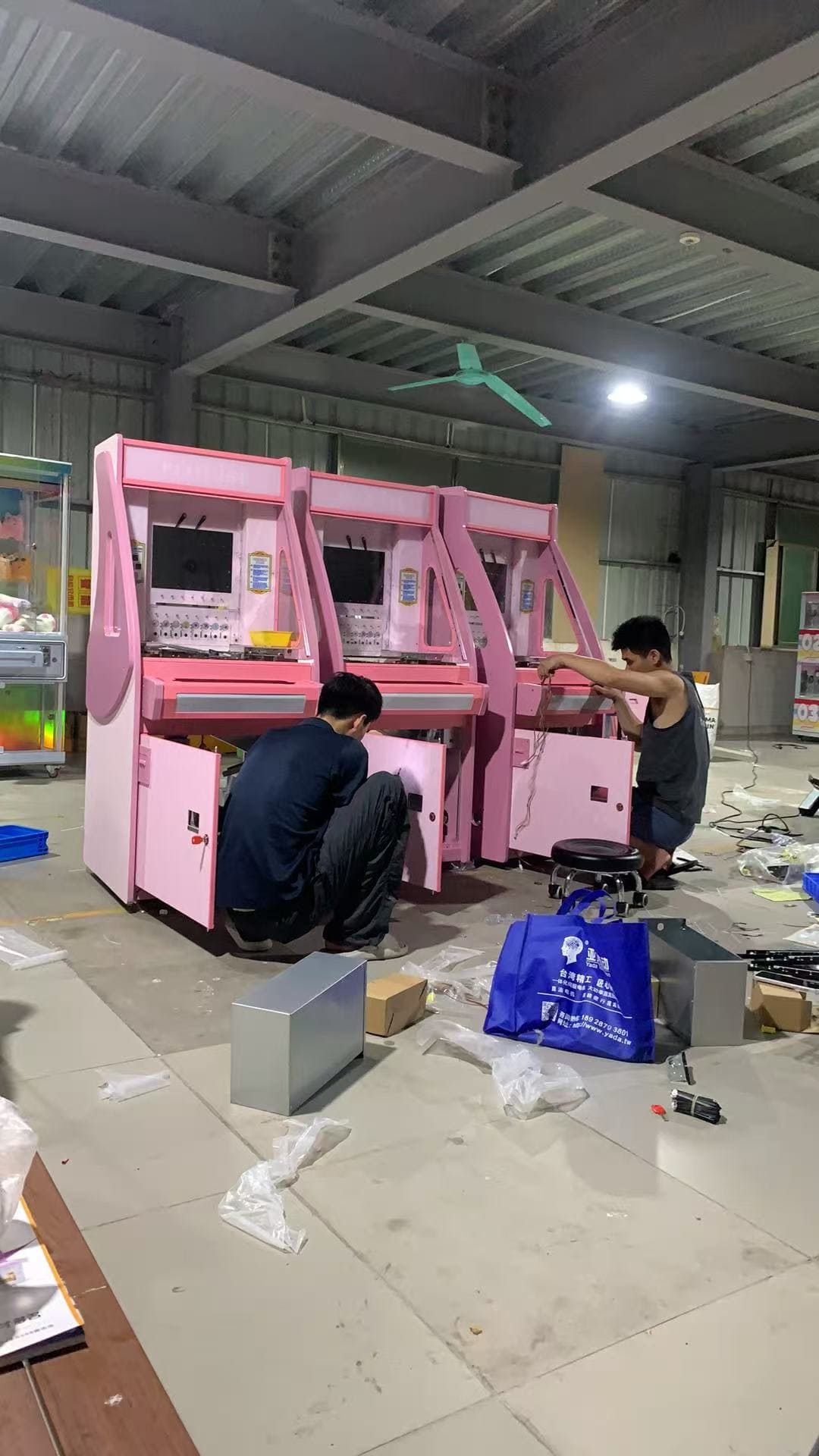
Every finished WIDIN unit runs a 72-hour continuous full-load aging test before export, with no exceptions for bulk orders or standard models. During the cycle, the machine plays uninterrupted: coin validation, ticket redemption, dynamic lighting, repeated gameplay, under simulated mall voltage and temperature. The test exposes what a startup check cannot — power supplies that sag under sustained load, motors that jitter after hours of running, weak solder joints, firmware conflicts between boards. Any unit that fails is disassembled, repaired, and run through the full cycle again.
Upstream of that, incoming components are batch-sampled under an IQC regime with a 0.5% failure tolerance: motors, sensors, coin validators, display panels. A batch that exceeds the tolerance is rejected whole, so a marginal component lot never reaches the production line and never becomes next year's field failure.
What Does Engineering-Verified OEM/ODM Customization Actually Involve?
Customisation in this industry often stops at artwork: a logo printed, a colour changed. The risk in that approach is not cosmetic. A cabinet shape changed without structural review can block internal airflow and cook its own electronics; a firmware modification layered onto a generic board can run for weeks and then fail in a pattern nobody can reproduce.
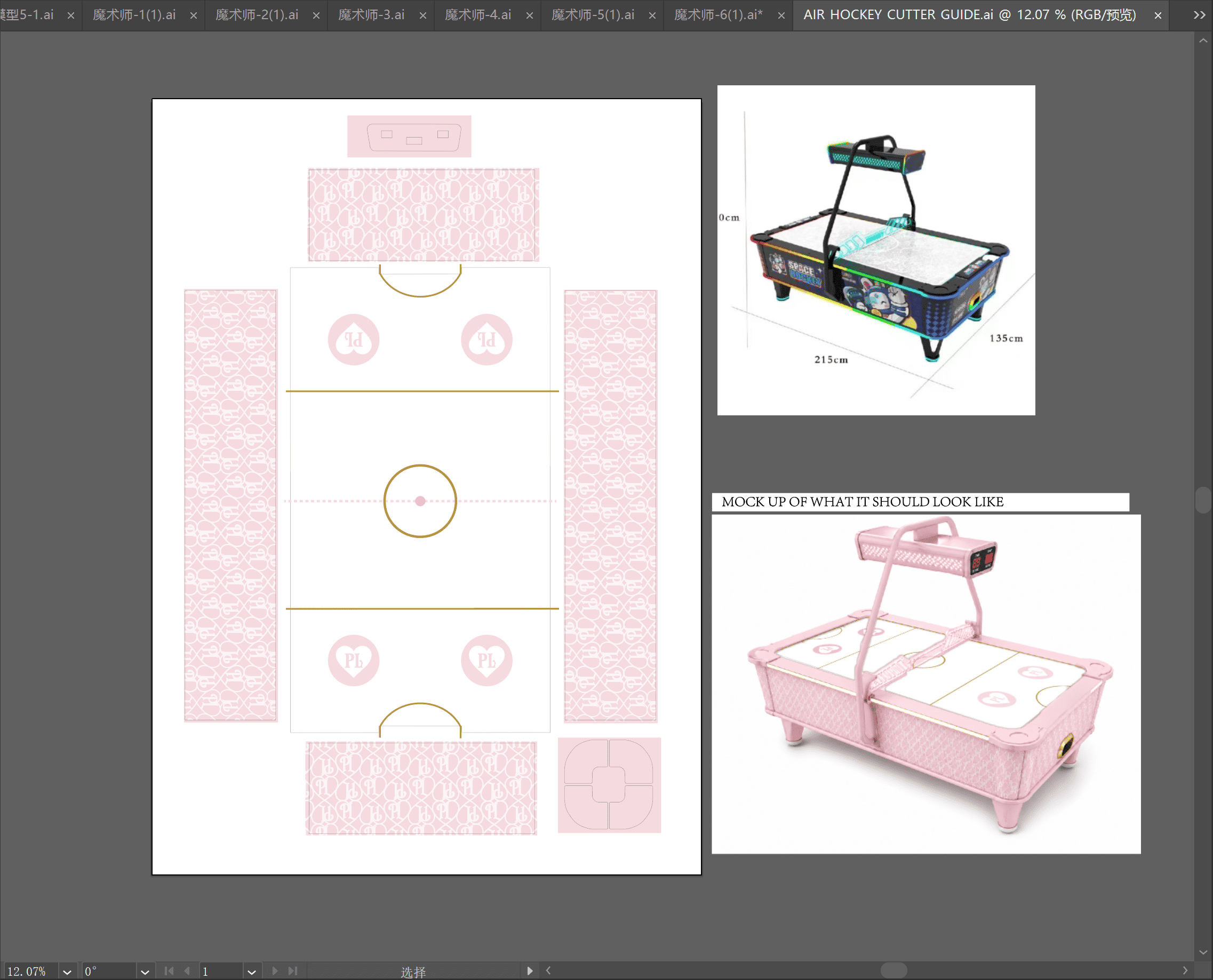
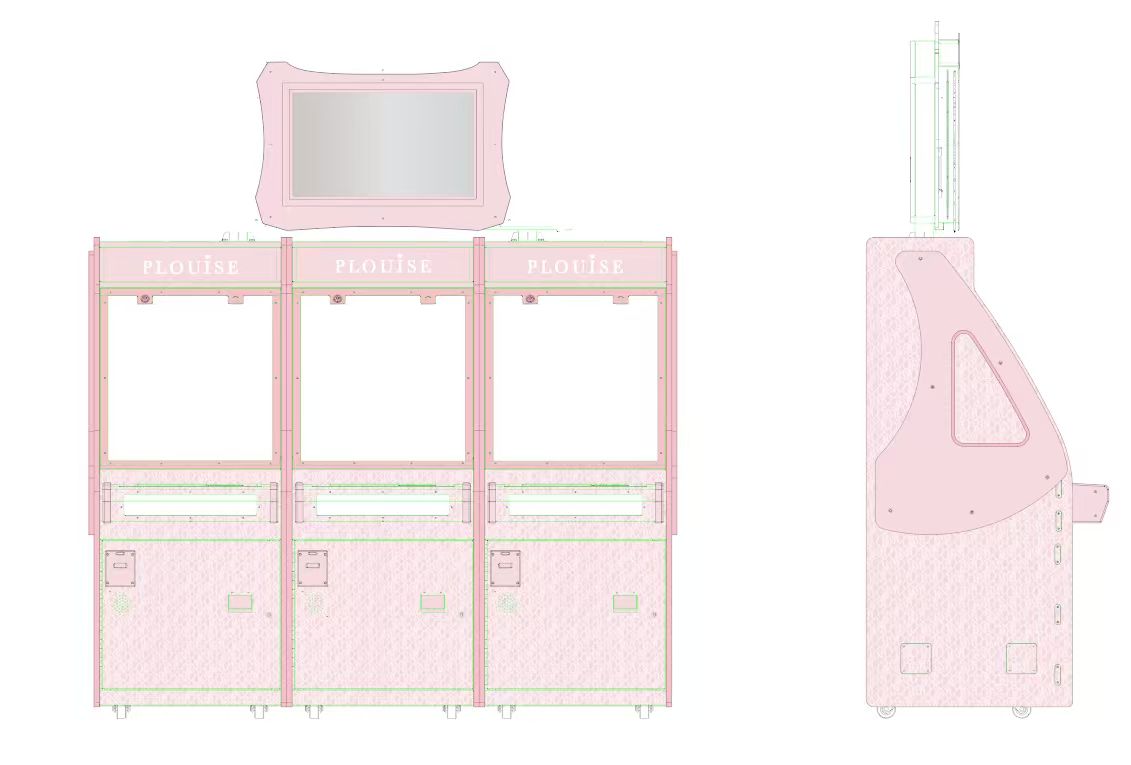
WIDIN's custom orders pass through three validation stages before production: engineering parameter confirmation, structural compatibility simulation, and firmware adaptive debugging. Cabinet redesigns are reviewed for load-bearing capacity and heat-dissipation paths before aesthetics are touched. Functional ODM work — multi-machine linkage, third-party payment integration, custom payout logic — is developed and debugged by the in-house software team on the same boards the production line uses, so a custom feature ships with the same test coverage as a standard one.
Every custom order's files are permanently archived: cabinet drawings, PCB configurations, firmware versions. This solves a problem most buyers only discover on the reorder. When a factory discards custom data after shipment, the second batch never quite matches the first, and custom spares become unbuildable. Archived files mean a repeat order runs from the same engineering baseline as the original, and a part for a two-year-old custom cabinet is still a part the factory can make. Full process detail is on the OEM & custom arcade solutions page.
How Are Machines Packed and Certified for Export?
Two things go wrong between a factory and an overseas venue: transit damage and customs holds. Both are cheaper to design out than to repair.
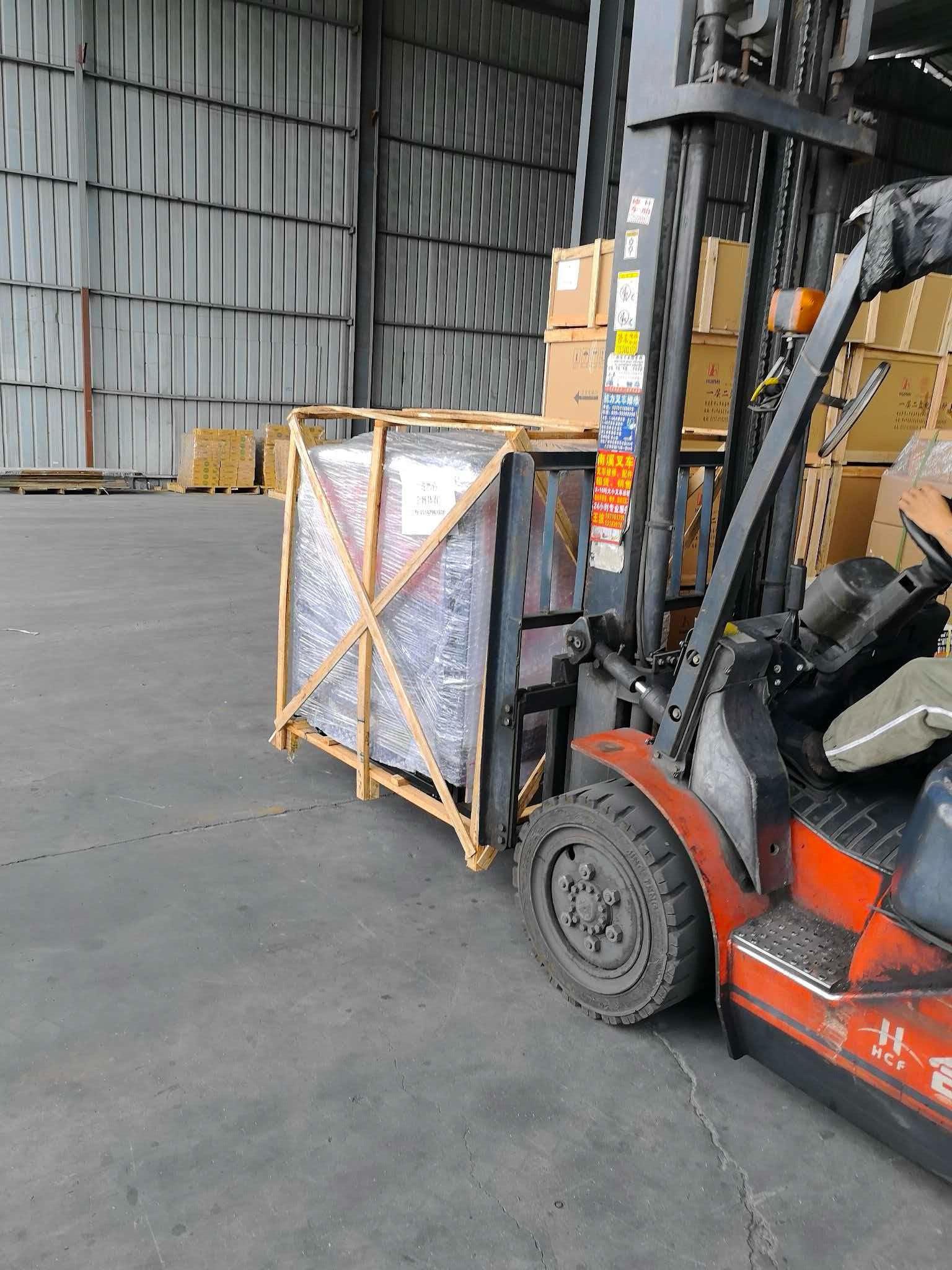
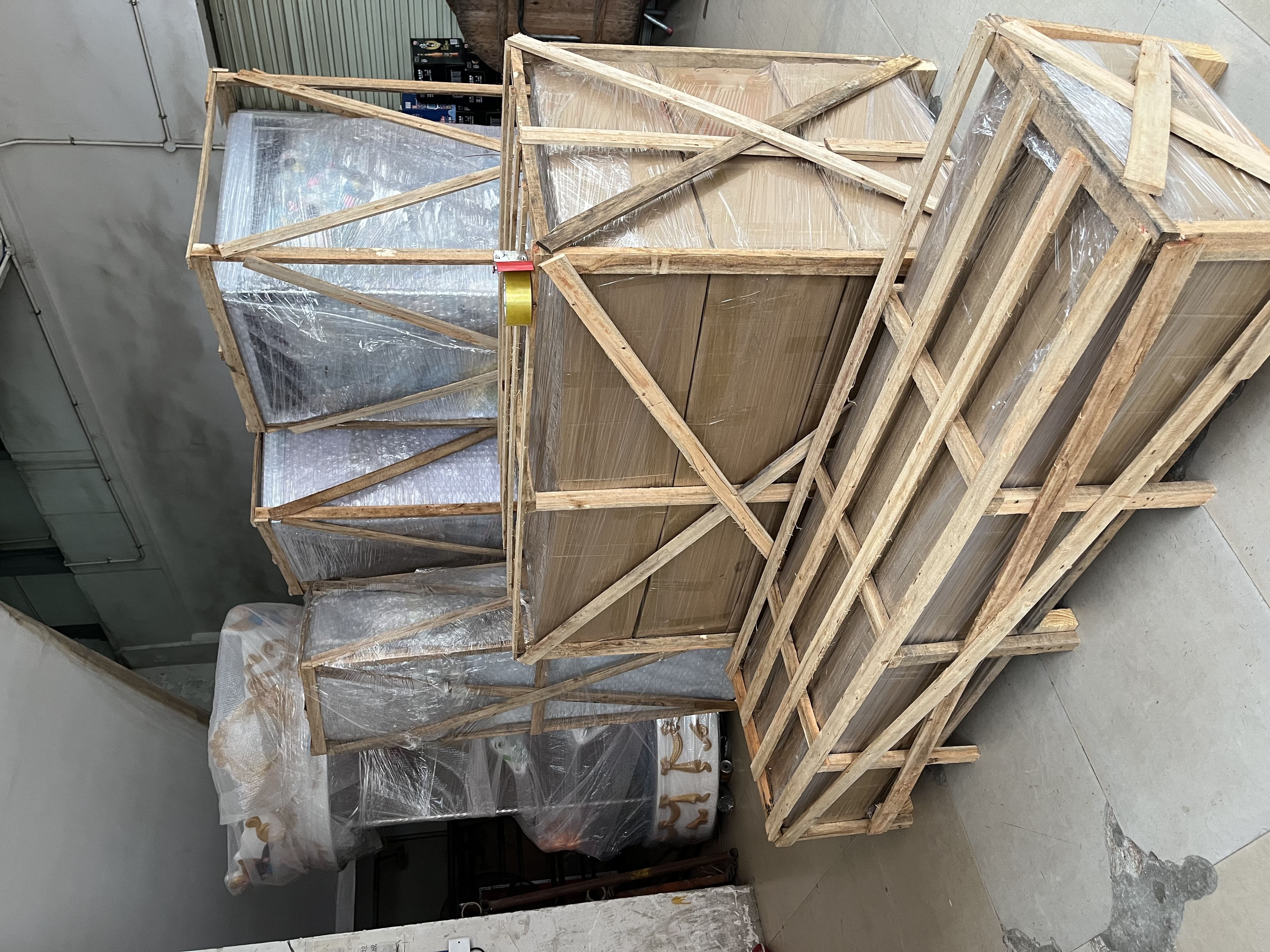
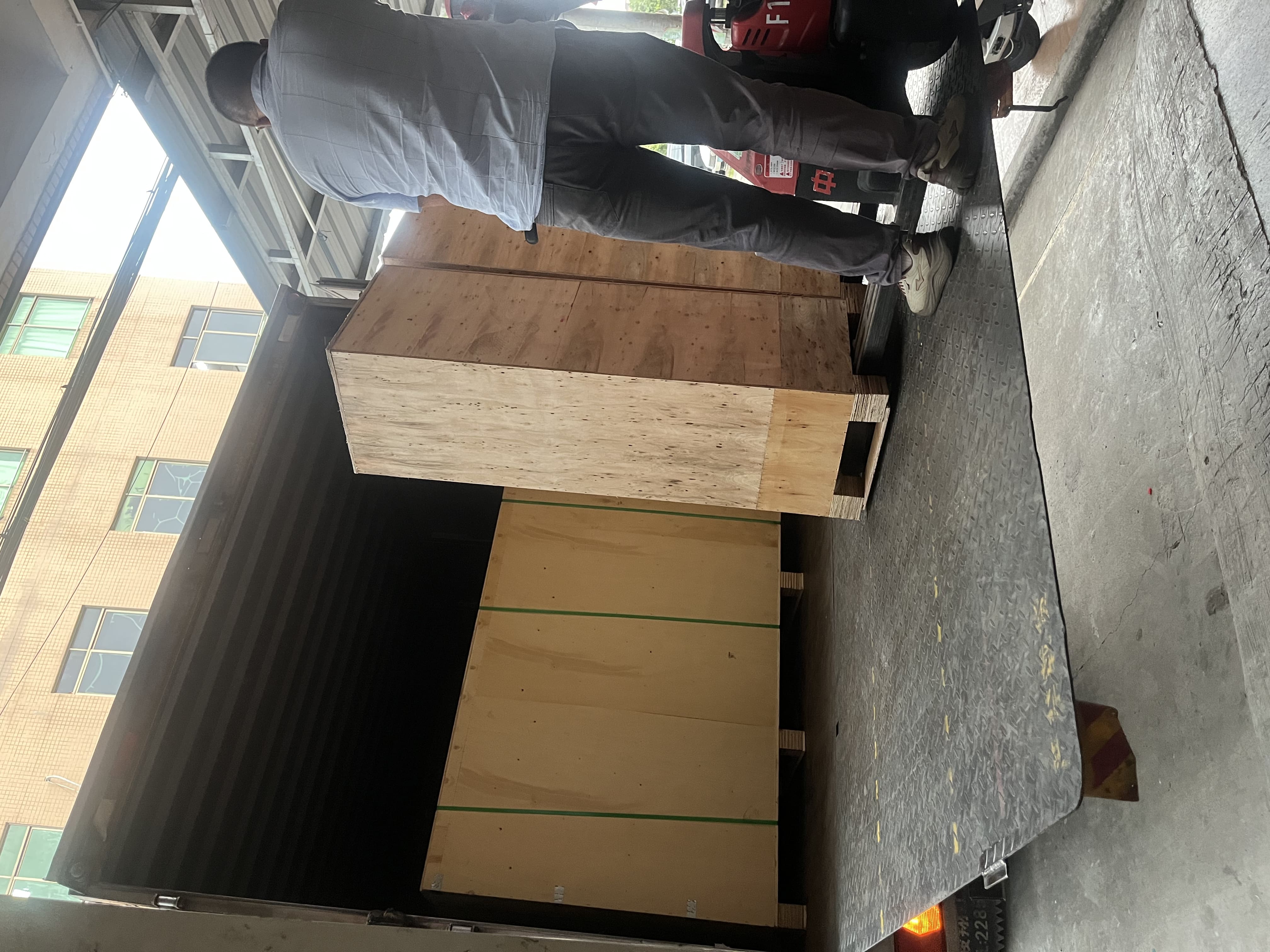
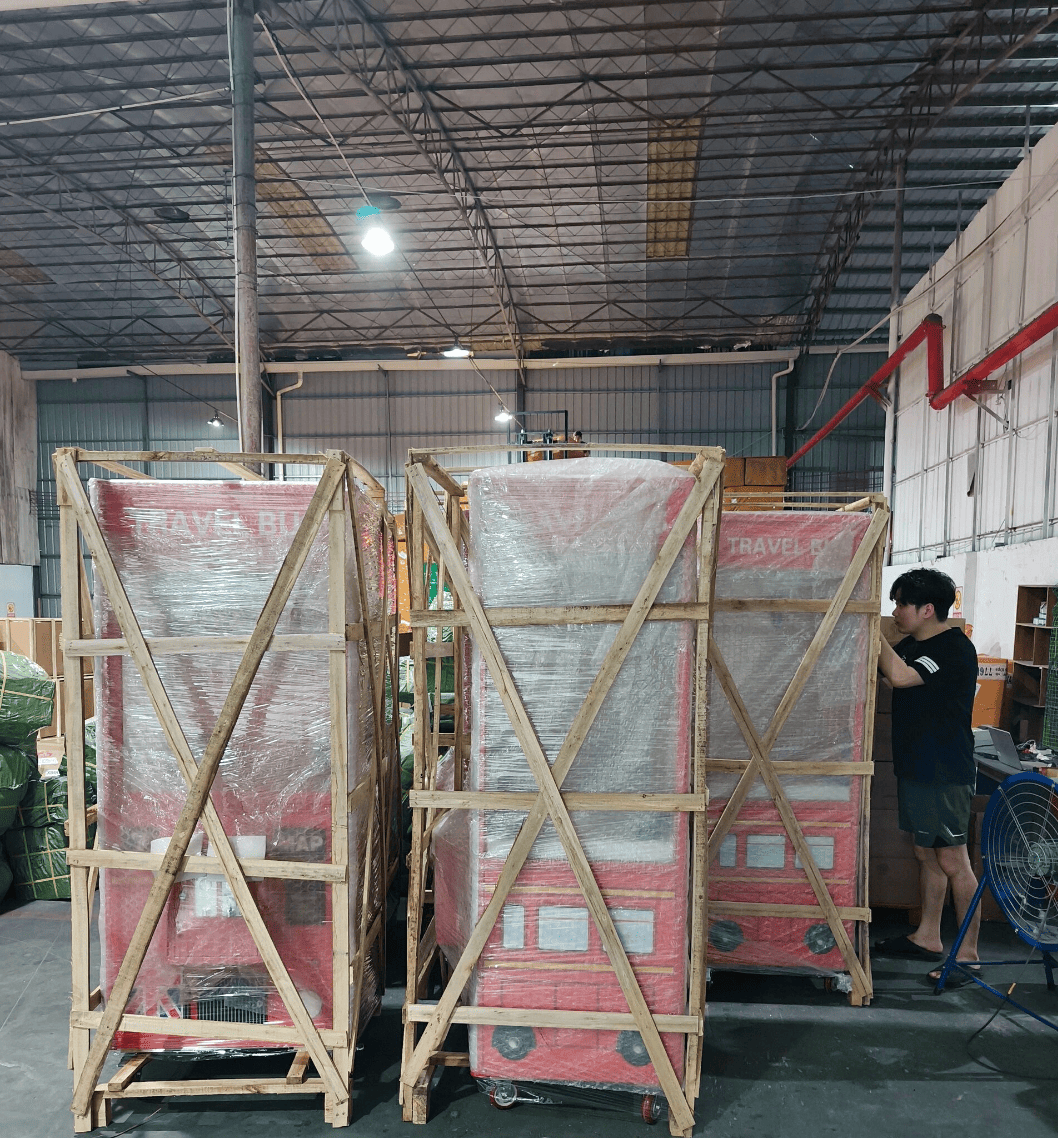
Packing is specified for sea freight rather than adapted from domestic practice: layered foam fixation around precision electronics, full-body stretch wrap against collision and moisture, and optional solid-wood framing for high-value or custom units. Detachable components are labelled to a unified scheme, so the team unloading in your city reassembles the machine the same way the line that built it did. More on the process is on the factory & manufacturing page.
On compliance, machines are configured for the destination market before production: voltage system, insulation standards, electromagnetic compatibility parameters, and safety structures are set for European, American, Southeast Asian, or Australian requirements, and each shipment carries its complete export documentation. Certificates cover the configuration that actually shipped — which is the detail customs officers check and the detail some suppliers let drift. Buyers who need specific certificates for their market should name them at the quotation stage; see the FAQ for what to list.
What Happens When a Machine Needs a Part Years After Delivery?
The most expensive failure in arcade operations is not a broken machine — it is a discontinued one. Most manufacturers phase out spare-parts production for a model within one to two years, so a single failed board can write off an otherwise working cabinet.
WIDIN produces its own PCBs, fabricates its own steel and writes its own firmware, which means the factory can still build a matching part years after a model left the catalogue. Original motors, sensors, boards, control panels and firmware-adapted accessories stay in production at stable pricing. Every shipment includes English operation manuals, wiring diagrams, and step-by-step video troubleshooting; the technical team gives remote guidance during working hours so venue staff resolve most faults themselves, and bulk clients receive spare-parts stocking suggestions based on their region and usage so the wearing parts are on the shelf before they are needed.
What Do These Decisions Change for a Venue?
| WIDIN practice | Common trade default | What it changes for the operator |
|---|---|---|
| 1.2 mm load-bearing steel frames | 0.6–0.8 mm panels | Vibration stops loosening connectors; panels and controls keep alignment under daily impact |
| In-house PCB design and firmware | Generic third-party boards | Boards rated for 16-hour duty; difficulty, pricing and payout adjustable by venue staff |
| 72-hour full-load aging test on every unit | 3–5 minute power-on check | Thermal, fatigue and firmware faults are caught at the factory, not during peak hours on your floor |
| Four-stage powder coating, ~8 h per cabinet | Single-layer spray paint | Finish holds through humid mall air and ocean freight; appearance lasts 3+ years |
| Permanent archiving of custom-order files | Custom data discarded after shipment | Repeat orders match the first batch; custom spares remain buildable |
| Lifelong spare-parts production | Parts phased out within 1–2 years | One failed board no longer writes off a working machine |
The process figures above — steel gauge, test duration, coating stages, tolerance rates — are the factory's own production parameters. The outcome figures some suppliers publish, such as downtime-reduction percentages, are omitted here because they cannot be verified by either side; the process numbers can, by anyone who visits the floor.
Put together, these are also why a WIDIN cabinet is specified for 4–6 years of commercial operation against the 2–3 years typical of wholesale equipment. The difference is not one component — it is that thin steel, generic boards, and skipped testing each pull the service life down independently, and this line-up fixes all three.
Frequently Asked Questions
What makes WIDIN's commercial arcade machines more reliable than generic Chinese arcade equipment?
Three differences carry most of the weight. The load-bearing frame is 1.2 mm cold-rolled steel rather than the 0.6–0.8 mm common in the trade, so vibration cannot work internal connectors loose. The circuit boards are designed and calibrated in-house for continuous commercial duty rather than bought as generic consumer-grade boards. And every finished unit runs a 72-hour full-load aging test before export, which catches the thermal and fatigue faults that a short power-on check misses.
How do you ensure no component substitution during mass production?
All incoming materials and electronic parts go through batch IQC sampling with a 0.5% failure tolerance, and any batch that exceeds it is rejected whole. If a component must be replaced in production, the substitution requires prior written confirmation from the customer before the batch proceeds.
Can you support fully customised OEM/ODM arcade solutions for FEC projects?
Yes. Structural adjustment, artwork, firmware parameters, and multi-machine linkage are all handled by the in-house mechanical and software teams, and every custom order passes three pre-production validation stages: engineering parameter confirmation, structural compatibility simulation, and firmware adaptive debugging. Custom engineering files are permanently archived, so repeat orders match the original batch.
How long is the service life of your commercial arcade machines?
Under normal commercial operation and routine maintenance, the machines are specified for 4–6 years of stable operation, against the 2–3 years typical of wholesale arcade equipment. The figure follows from the same three factors: the reinforced steel frame, commercial-grade matched components, and the heat-dissipation design around the electronics.
Do you provide CE/FCC compliance for overseas markets?
Yes. Machine voltage, electromagnetic compatibility, and safety structures are configured for the destination market before production, and each shipment carries its complete certification documentation. Certificates are matched to the configuration that actually ships. If your market requires specific certificates, name them at the quotation stage so they are built into the configuration rather than attached afterwards.
How do you solve machine faults for overseas buyers?
Every shipment includes English operation manuals, wiring diagrams, and video troubleshooting tutorials. The technical team provides remote guidance during working hours so venue staff can resolve daily faults themselves. Faulty core components are replaced free of charge within the warranty period, and original spare parts remain in production after the warranty ends.
What packaging do you use for international sea freight?
Layered foam fixation around precision electronics, full-body stretch wrap for collision and moisture protection, and optional solid-wood framing for high-value or custom units. Detachable parts carry unified labels so overseas teams can reassemble without guesswork. The specification is written for transoceanic container conditions rather than adapted from domestic packaging.
Can you guarantee consistent quality for repeat bulk orders?
Yes. All production parameters, component standards, and custom files for an order are archived permanently, so a repeat order runs from the same engineering baseline as the first batch, under the same IQC and QC standards.
What types of commercial arcade equipment do you specialise in?
Full commercial-grade FEC equipment: claw crane machines, racing simulators, boxing strength machines, basketball machines, shooting games, fishing games, kids machines and ticket redemption games, plus custom builds for specific venues.
How do you help buyers reduce long-term operating costs?
Three mechanisms, all design-side. Reinforced frames and tested electronics reduce the fault frequency that generates maintenance labour. Lifelong spare-parts supply means a single failed component never scraps a working machine. And adjustable in-house firmware lets the venue tune difficulty, pricing, and payout to its own traffic instead of paying a third party for each change.
WIDIN at a Glance
| Brand | WIDIN Tech |
| Legal entity | Guangzhou Widin Animation Technology Co., Ltd |
| Location | No. 21 Jinkeng Road, Panyu District, Guangzhou, Guangdong, China |
| Business | Design and manufacture of commercial arcade machines; OEM/ODM custom builds |
| In-house capabilities | Steel fabrication, PCB design and firmware development, four-stage powder coating, final assembly and aging testing |
| Product lines | Claw, boxing, racing simulator, fishing, basketball, shooting, kids, redemption — see all products |
| Markets served | Southeast Asia, Latin America, the Middle East, Europe, North America, Australia, and other regions. |
| Service life target | 4–6 years commercial operation |
| Quality process | 72-hour full-load aging test per unit; IQC batch sampling at 0.5% failure tolerance |
| Founded | 2014 |
Talk to the Factory
Whether you are buying standard cabinets, planning a custom FEC project, or setting up distribution, the fastest route is through the contact page — send the destination country, the machine types, and the quantity, and the quotation comes back with the engineering assumptions stated.