

How Does an Arcade Boxing Punch Machine Work? Sensors, Scoring Algorithms & Custom Solutions
An arcade boxing punch machine looks simple: a player punches a target, and a score appears on the screen within seconds.
Behind that simple interaction, however, is a combination of impact sensors, electronic control hardware, scoring algorithms, display systems, sound effects, and game software.
For commercial arcade operators and amusement equipment buyers, understanding how a boxing punch machine works is important when comparing machines, evaluating quality, or developing a customized model.
The basic process is:
Punch → Sensor Detection → Signal Processing → Scoring Algorithm → LED Display → Game Feedback
At WIDIN, we can customize not only the cabinet design of a commercial boxing punch machine, but also its scoring logic, difficulty settings, interface, sound effects, branding, and other software functions according to project requirements.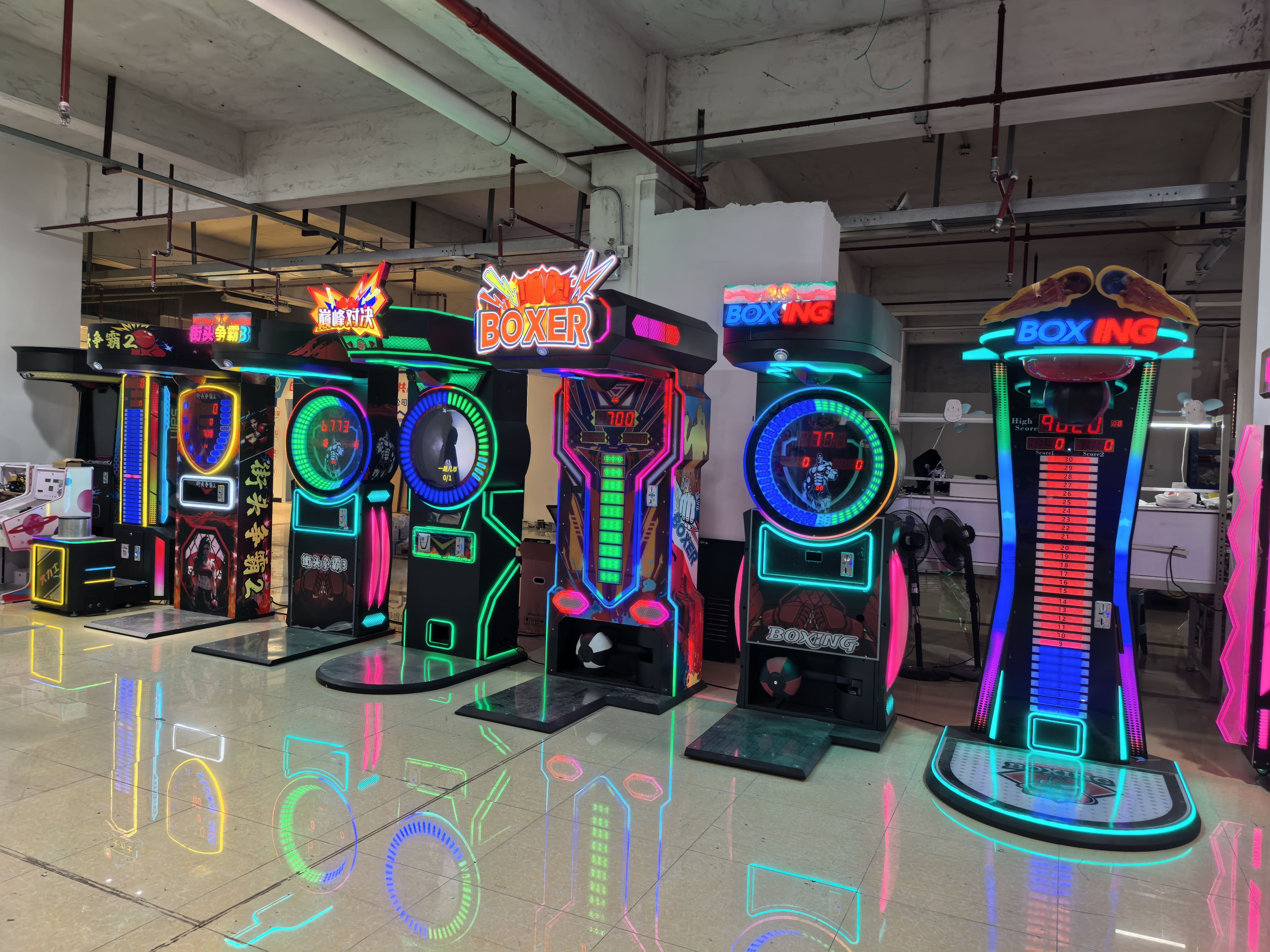
How Does an Arcade Boxing Punch Machine Work?
A commercial arcade boxing punch machine converts the physical impact of a player's punch into a digital game score.
When the player hits the punching pad, the sensor inside the target detects the impact. The signal is then transmitted to the machine's control system, where the software processes the input and converts it into a corresponding score.
The result is immediately shown on the LED display, while the machine can simultaneously trigger sound effects, animations, ranking updates, or other interactive functions.
The complete process can be summarized as:
1. Player punches the target
↓
2. Impact sensor detects the punch
↓
3. Controller receives the signal
↓
4. Scoring algorithm processes the data
↓
5. Score is generated
↓
6. LED display shows the result
↓
7. Sound and visual effects provide feedback
↓
8. Leaderboard records the result
This combination of hardware and software is what turns a simple punching pad into a commercial arcade game.
1. Impact Sensor: Detecting the Punch
The first critical component is the impact sensing system.
Inside the punching target, the sensor detects the physical force generated when the player hits the pad. The sensor converts the mechanical impact into an electrical signal that the machine's control system can process.
A commercial boxing machine needs to distinguish an effective punch from minor vibration, accidental contact, or repeated mechanical movement.
The sensing system therefore plays an important role in:
Detecting valid punches
Capturing impact intensity
Reducing unwanted signals
Maintaining consistent game operation
Providing input for the scoring system
For commercial equipment, sensor selection and calibration are particularly important because the machine may be used repeatedly throughout the day.
Why does sensor calibration matter?
Two machines can use similar-looking sensors but produce different player experiences if their calibration parameters are different.
If the detection range is too sensitive, the machine may register unwanted impacts.
If it is not sensitive enough, players may feel that their punches are not being recognized correctly.
A well-designed commercial system therefore needs the sensor, mechanical structure, controller, and software algorithm to work together.
2. Controller: Processing the Sensor Signal
Once the sensor detects an impact, the signal is transmitted to the machine's electronic control system.
The controller acts as the communication and processing center between the sensor, software, display, sound system, and other electronic components.
Depending on the machine configuration, the control system can manage:
Sensor input
Punch detection
Score calculation
LED display output
Sound effects
Game animations
Leaderboard data
Payment functions
Game settings
This means that the controller is not simply receiving a sensor signal.
It coordinates the complete interaction between the player and the machine.
3. Scoring Algorithm: Turning a Punch Into a Game Score
The sensor detects physical input, but the sensor itself does not decide what score the player receives.
That is the job of the scoring algorithm.
The algorithm processes the detected signal according to predefined parameters and converts it into the final game result.
A simplified concept is:
Sensor Signal → Signal Processing → Calibration → Scoring Rules → Final Score
The actual calculation logic can vary depending on the machine design and software configuration.
This is one of the most important areas for OEM and ODM projects because different markets and venues may require different gameplay.
For example, an operator may want:
A wider scoring range for casual players
More challenging scoring for competitive gameplay
Different difficulty levels
Different score conversion rules
Special bonus scores
Event-specific scoring modes
Customized ranking rules
Therefore, the software algorithm can have a direct impact on the player experience.
4. Real-Time LED Display
After the scoring system processes the punch signal, the final result is sent to the display.
Commercial boxing punch machines commonly use bright LED displays that allow both the player and nearby spectators to see the result clearly.
Depending on the design, the display can show:
Punch score
Strength level
Player ranking
Game instructions
Countdown
Challenge results
Promotional graphics
Brand information
A fast and clear display is particularly important in commercial venues because spectators can easily understand the result and become interested in playing.
This can help turn a single-player interaction into a more visible attraction within an arcade or entertainment venue.
5. Sound Effects and Interactive Feedback
A boxing punch machine is not only about measuring impact.
The machine also needs to make the result feel exciting.
After a punch is detected, the control system can trigger different audio and visual effects according to the game result.
For example:
Normal Punch → Standard Sound
Strong Punch → Enhanced Sound
High Score → Celebration Effect
Record Score → Special Animation
The combination of score, sound, lighting, and animation creates immediate feedback.
For commercial arcade operators, this is valuable because a machine with stronger visual and audio interaction can attract attention from players nearby.
6. Leaderboard System
A leaderboard can add another layer of competition to an arcade boxing machine.
Instead of simply displaying one player's score, the system can record high scores and compare new results with previous results.
Depending on the software configuration, the machine may support:
High-score records
Ranking display
Player challenges
Score reset
Automatic data clearing
Event ranking
Customized ranking rules
For arcade operators, leaderboard functionality can encourage players to try again after achieving a lower-than-expected score.
The goal is not simply to measure punching strength.
It is to create a repeatable game experience.
What Are the Main Components of an Arcade Boxing Punch Machine?
A commercial boxing punch machine is typically made up of several interconnected systems.
| Component | Main Function |
|---|---|
| Punching Target | Receives the player's punch |
| Impact Sensor | Detects the physical impact |
| Controller | Processes electronic signals |
| Scoring Software | Converts input into game scores |
| LED Display | Shows the result |
| Speaker System | Provides audio feedback |
| Lighting System | Creates visual interaction |
| Storage / Memory | Stores game or ranking data |
| Payment System | Controls paid gameplay |
| Cabinet | Protects and supports the equipment |
The quality of the final machine depends on how well these components work together rather than on any single component.
Why Is the Scoring Algorithm Important?
For a standard entertainment machine, a fixed scoring program may be sufficient.
For a customized commercial project, however, the algorithm can become much more important.
Different customers may have different expectations regarding:
Score range
Difficulty
Player experience
Game duration
Competition rules
Ranking system
Promotional functions
For example, a family entertainment center may want a more accessible gameplay experience, while an arcade targeting teenagers and young adults may prefer a more competitive scoring system.
A distributor may also need different software settings for different markets.
This is why a flexible scoring system can be an important part of an OEM arcade boxing machine project.
Can the Boxing Punch Machine Algorithm Be Customized?
Yes.
The scoring algorithm and related software functions can be customized depending on the hardware architecture and project requirements.
At WIDIN, customized boxing punch machine solutions can include adjustments to:
Scoring Rules
The relationship between the detected impact signal and the displayed game score can be configured according to the project requirements.
Difficulty Levels
Different game modes can be developed for different player groups and venue positioning.
Score Conversion
The scoring range and conversion logic can be adjusted during software development and calibration.
Leaderboard Logic
Ranking rules, score records, reset functions, and other competitive features can be configured.
Game Interface
The display interface can be customized with customer branding, colors, graphics, instructions, and other visual elements.
Sound and Lighting Effects
Different effects can be programmed according to score levels or game events.
Branding
OEM projects can incorporate customer logos, brand colors, promotional messages, and customized game interfaces.
Why Choose a Factory With Software and Hardware Development Capability?
When buying a commercial arcade boxing punch machine, it is easy to focus only on the cabinet appearance, screen size, or machine price.
However, the internal hardware and software determine how the machine actually performs after installation.
A factory with both manufacturing and R&D capabilities can coordinate:
Mechanical Design + Electronic Hardware + Sensor System + Software + Scoring Algorithm + Final Testing
This is particularly important for OEM and ODM projects.
If the cabinet is manufactured by one supplier, the electronic system comes from another supplier, and the software comes from a third party, making changes later can become more complicated.
An integrated manufacturer can evaluate the complete system as one project.
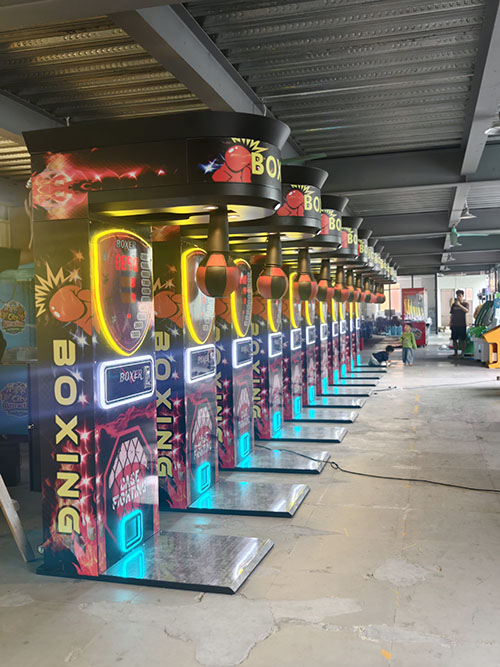
Inside Our Boxing Punch Machine Testing Process
① Sensor testing
② Control board testing
③ Score calibration
④ LED display testing
⑤ Full-machine testing
WIDIN Custom Arcade Boxing Punch Machine Solutions
WIDIN is an arcade game machine manufacturer based in Guangzhou, China, with experience in commercial amusement equipment manufacturing and customized arcade machine development.
For customers looking to develop a differentiated boxing punch machine, we can support customization across both the physical machine and software system.
Depending on the project, customization can include:
Cabinet structure
Exterior design
Brand graphics
Punching target
Display configuration
LED lighting
Payment system
Scoring rules
Game difficulty
Leaderboard
Sound effects
User interface
Software functions
OEM / ODM requirements
The exact customization scope depends on the project specifications, hardware configuration, and software requirements.
Looking for a customized boxing punch machine?
Send us your cabinet concept, target market, preferred functions, branding requirements, or existing machine reference.
Our team can review the project and recommend a suitable hardware and software configuration.
[Request a Custom Boxing Machine Solution]
Arcade Boxing Punch Machine: Standard vs. Custom Solutions
| Feature | Standard Machine | Custom Solution |
| Cabinet | Standard design | Customized |
| Branding | Standard | OEM branding |
| Scoring | Fixed configuration | Adjustable |
| Difficulty | Standard | Customizable |
| Display Interface | Standard | Customized |
| Sound Effects | Standard | Custom options |
| Leaderboard | Standard | Custom logic |
| Payment System | Standard options | Project-based |
| Software | Existing program | Customized development |
| Appearance | Existing model | OEM / ODM design |
For buyers who only need a ready-to-run arcade machine, a standard model may be the most cost-effective option.
For distributors, arcade operators, amusement brands, and customers developing a unique product, a customized solution may provide greater flexibility.
Frequently Asked Questions
How does an arcade boxing punch machine measure punching strength?
The machine uses an impact sensing system inside the punching target to detect the force generated by the punch. The signal is then processed by the controller and scoring software before the result is displayed on the screen.
Does an arcade boxing punch machine score real punching force?
The displayed number is generally a game score generated from the detected impact signal and the machine's scoring algorithm. It should not be interpreted as a laboratory-grade measurement of physical punching force unless the equipment has been specifically engineered and calibrated for that purpose.
Can I customize the boxing machine scoring algorithm?
Yes. Depending on the hardware and software architecture, the scoring rules, difficulty levels, score conversion, leaderboard functions, interface, sound effects, and other game parameters can be customized.
Can the boxing punch machine have my own brand?
Yes. OEM projects can include customized cabinet graphics, logos, colors, interface elements, and other branding requirements.
Can the payment system be customized?
Payment options depend on the machine configuration and target market. Coin mechanisms, card systems, cashless payment solutions, and other payment configurations can be evaluated according to the project requirements.
How long does it take to develop a customized boxing punch machine?
The development timeline depends on the level of customization.
A standard machine can normally move into production much faster than a project involving new cabinet engineering, electronics, software development, and prototype testing.
For a custom project, the timeline should be confirmed after the technical requirements are evaluated.
What information should I provide for a custom boxing punch machine project?
The most useful information includes:
Target market
Intended venue
Cabinet dimensions
Player capacity
Screen requirements
Payment method
Branding requirements
Scoring requirements
Game functions
Estimated order quantity
Reference images or existing machine designs
The more complete the initial specifications are, the easier it is for the engineering team to evaluate the project.
Final Takeaway
An arcade boxing punch machine is more than a punching pad and an LED score display.
Its complete operating system combines:
Impact Sensor → Controller → Scoring Algorithm → Display → Sound → Ranking → Game Software
For standard arcade applications, a proven configuration may be sufficient.
For OEM and ODM projects, however, customized hardware, scoring logic, game interfaces, and interactive functions can help create a more differentiated product.
If you are planning to purchase or develop a commercial arcade boxing punch machine, WIDIN can evaluate your requirements and help determine whether a standard model or customized solution is more suitable for your project.
Have a boxing machine concept or reference design? Send it to our team for evaluation.