

What Are the Most Popular Types of Arcade Games?
The most popular types of arcade games for commercial venues include boxing strength tester machines, claw machines, racing arcade machines, basketball games, and children's arcade games.
Other popular categories include shooting games, dance machines, redemption games, multiplayer games, and VR attractions.
However, the most popular arcade machine is not necessarily the best choice for every business.
Commercial performance depends on factors such as target customers, venue type, floor space, pricing, machine visibility, gameplay, and operating costs.
For arcade operators, the better question is:
Which arcade games give my customers a strong reason to play, compete, win, or come back?
Five categories stand out because they provide five different types of entertainment:
Boxing machines: physical competition
Claw machines: prizes and anticipation
Racing machines: immersive competition
Basketball machines: skill and replayability
Kids arcade games: family entertainment
Understanding these differences can help buyers create a more balanced commercial arcade.
What Makes an Arcade Game Popular?
A commercially successful arcade game does not always need the most advanced technology.
The strongest attractions often share several basic characteristics.
Easy to Understand
Players should quickly understand what they need to do.
Punch the target.
Grab the prize.
Race the car.
Score the basketball.
Complete the children's game.
Simple gameplay reduces the barrier for first-time players.
Strong Visual Appeal
Arcade machines need to attract attention in a busy entertainment environment.
Large screens, lighting, movement, colorful artwork, and distinctive cabinet designs can make a machine easier to notice.
Immediate Results
Players generally want to see a clear result after playing.
That could be:
A score
A prize
A ranking
A race position
A winning result
A completed challenge
Immediate feedback also creates opportunities for replay.
Social Interaction
Many arcade games become more entertaining when friends or family members participate together.
Competition, challenges, and shared experiences can turn a single machine into a social attraction.
1. Boxing Strength Tester Machines
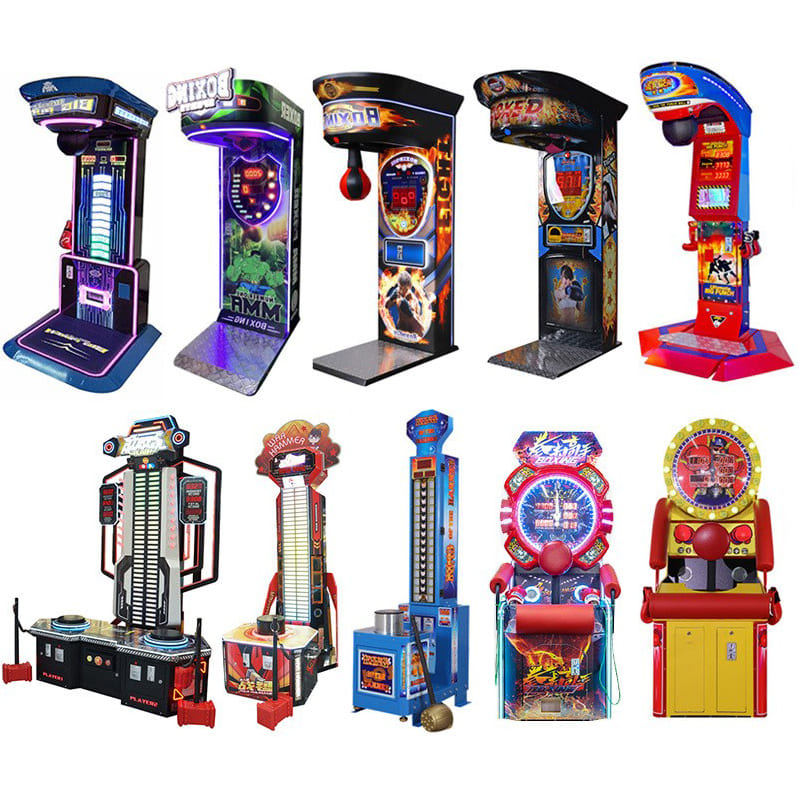 A boxing strength tester offers one of the simplest arcade concepts:
How hard can you punch?
The player hits a punching target, the machine detects the impact, and a score appears on the display.
The experience is easy to understand and requires very little instruction.
Why Are Boxing Machines Popular?
Boxing machines combine physical activity, competition, and instant scoring.
The basic experience is:
Approach → Punch → Score → Compare → Try Again
Players may want to beat their previous score or challenge friends.
This makes boxing machines particularly suitable for:
Teenagers
Young adults
Groups of friends
Casual players
Competitive customers
For commercial buyers, durability is particularly important because the machine is exposed to repeated physical impact.
When evaluating a boxing arcade machine, buyers should consider the punching mechanism, sensor reliability, scoring system, cabinet structure, display, maintenance access, and spare-parts availability.
2. Claw Machines
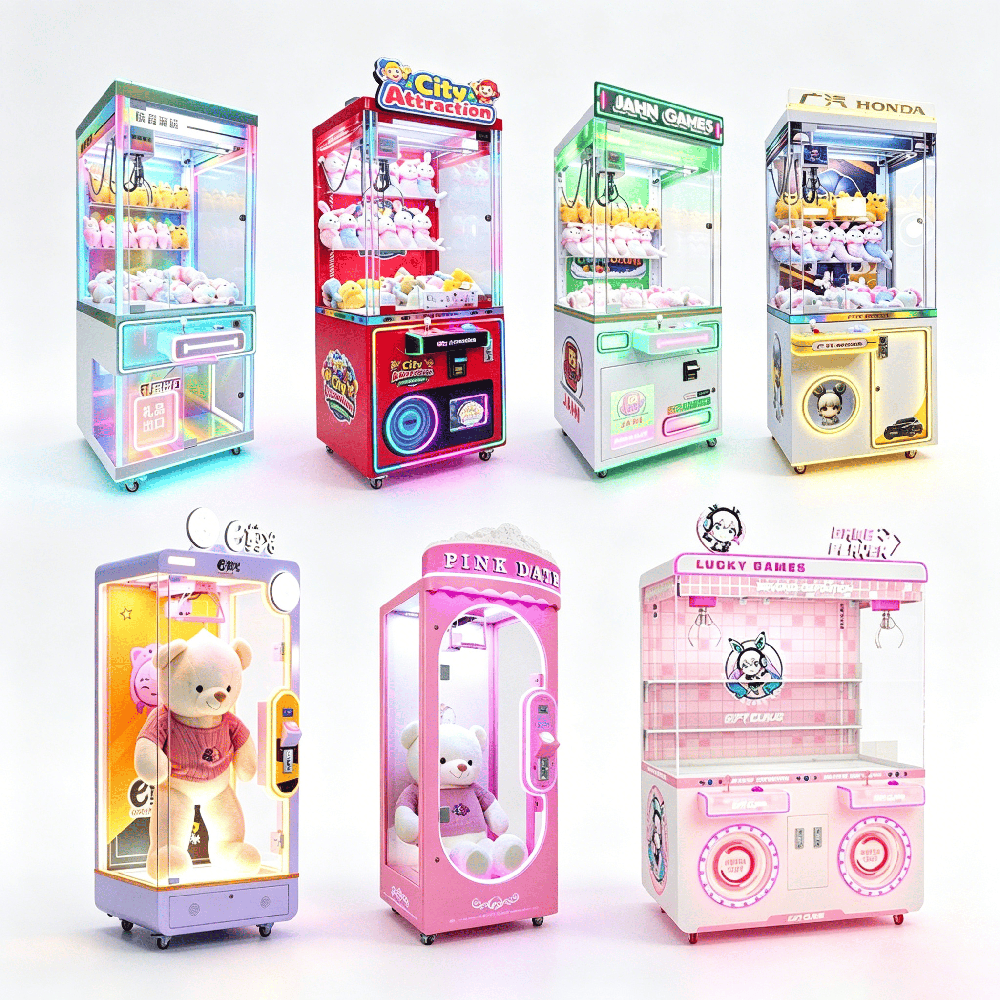
Claw machines attract players through a combination of prizes, skill, anticipation, and visual appeal.
The concept is straightforward:
Choose a prize → Control the claw → Try to grab it → Win or try again
One major advantage is that the potential reward is visible before the player starts.
Why Are Claw Machines Popular?
Claw machines can attract a broad audience:
Children
Teenagers
Young adults
Parents
Families
Operators can also change the prizes according to their target market.
Possible prize categories include plush toys, collectibles, promotional products, and small gifts.
Placement is also important. Claw machines can work well in entrance areas, main walkways, waiting zones, and family areas, where customers can easily see them.
For operators, the machine's visual presentation and prize strategy can be just as important as the cabinet itself.
3. Racing Arcade Machines
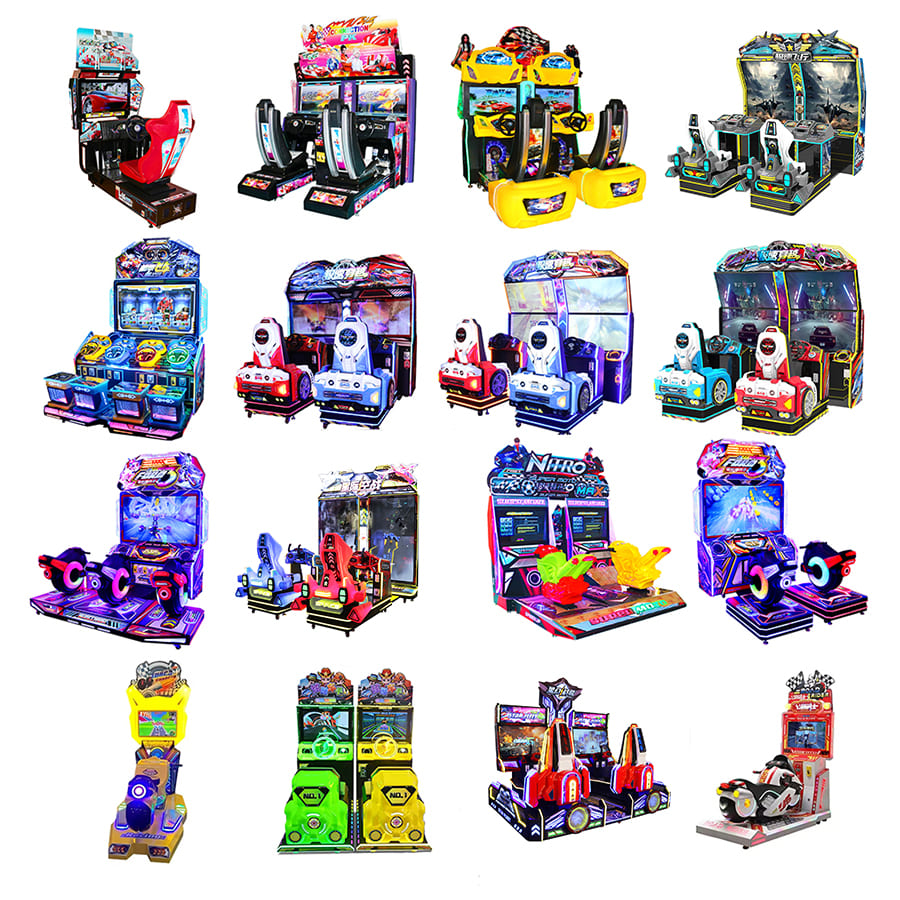 Racing arcade machines provide a more immersive experience through physical controls and large visual displays.
Depending on the model, a racing simulator may include:
Large display
Steering wheel
Pedals
Racing seat
Gear controls
Speakers
LED lighting
Motion systems
Multiplayer functions
Why Are Racing Games Popular?
The gameplay is immediately familiar:
Choose a car → Start → Race → Finish → Compare
The physical controls make the player feel more involved than watching a racing game on a standard screen.
Multiplayer racing can add another level of attraction because players compete directly against friends.
For commercial venues, buyers should consider screen size, cabinet footprint, steering and pedal quality, multiplayer capability, power requirements, cooling, and maintenance access.
Because racing machines can occupy considerable floor space, operators should evaluate the machine's potential value relative to the space it uses.
4. Basketball Arcade Machines
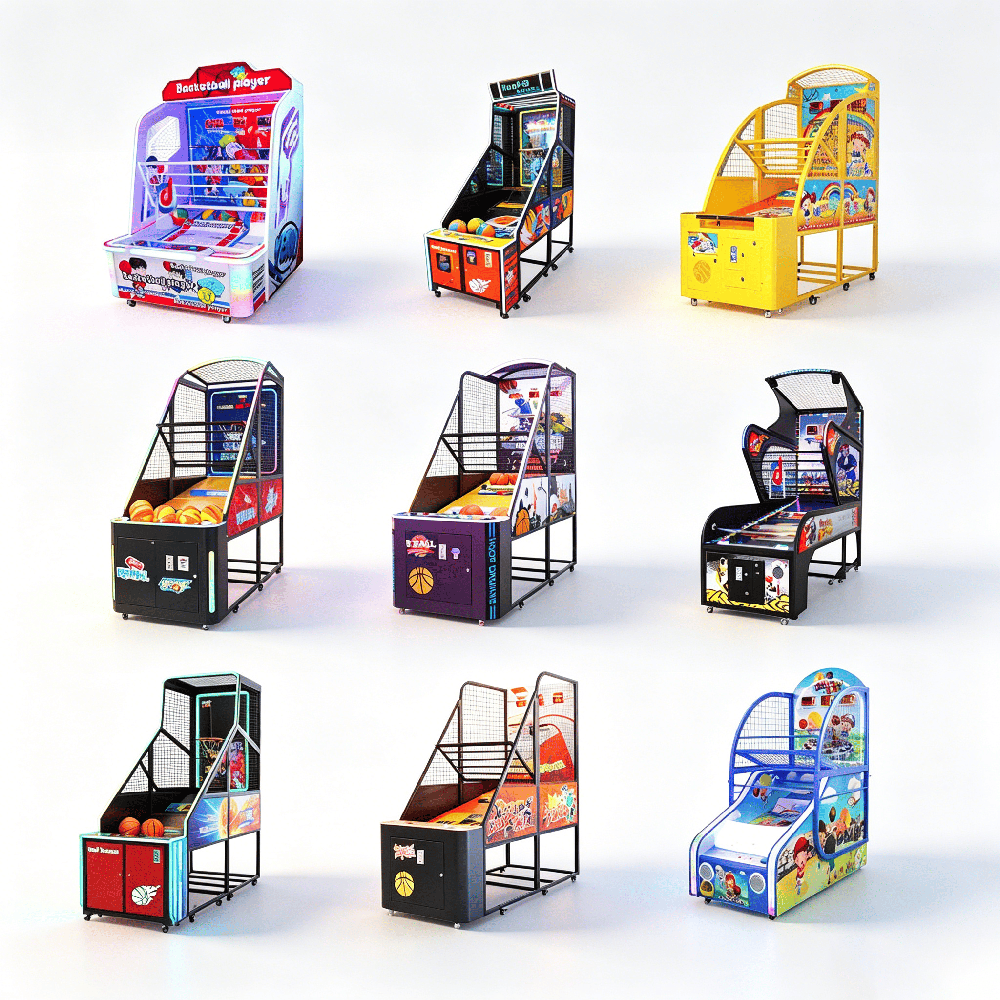 Basketball arcade machines combine physical activity, skill, speed, and competition.
The basic objective is simple:
Shoot as many baskets as possible before time runs out.
That makes basketball games easy for new players while still providing enough challenge to encourage replay.
Why Are Basketball Games Popular?
Basketball machines can attract teenagers, young adults, families, and groups of friends.
Players can compete for:
Higher scores
Longer streaks
Personal records
Head-to-head results
Two-player basketball machines can be particularly effective in social environments because the competition is visible to people nearby.
For buyers, important considerations include basketball return system, hoop and net durability, scoring accuracy, cabinet structure, game settings, lighting, and maintenance access.
Basketball machines can also complement boxing machines well.
Both are physical skill games, but they offer different experiences:
Boxing = Power
Basketball = Accuracy
This makes them useful additions to a diversified arcade floor.
5. Kids Arcade Games and Children's Rides
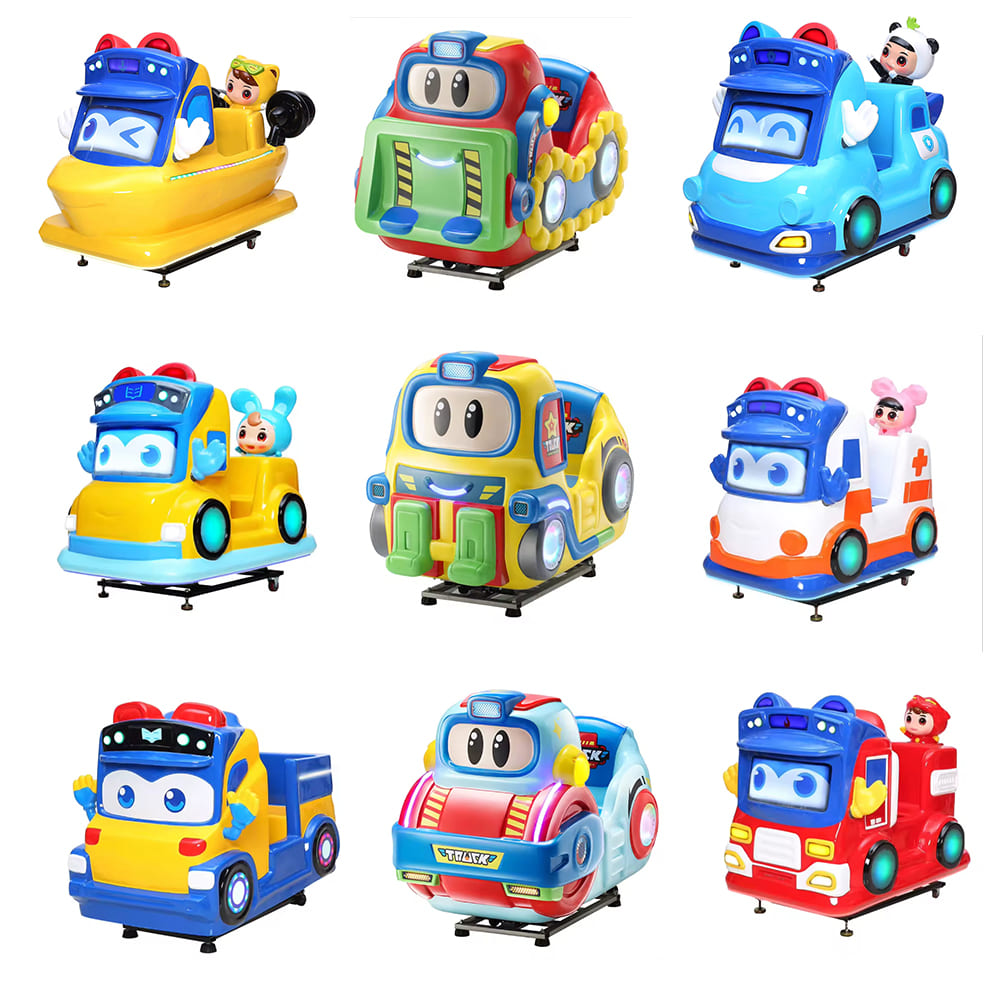 Children's arcade equipment plays an important role in family entertainment centers.
Examples include:
Children's rides
Interactive games
Mini driving games
Kids basketball games
Simple skill games
Themed rides
Interactive entertainment machines
Why Are Kids Games Important?
A family-oriented venue needs attractions for different age groups.
Children's games can give younger visitors something to enjoy while parents remain inside the venue.
A balanced family entertainment experience can therefore connect:
Children Play → Parents Stay → Family Explores → More Activities
For children's equipment, buyers should pay particular attention to age suitability, structural stability, safety-related design, controls, seating, visibility for parents, cleaning, and maintenance.
The goal is not simply to make the machine attractive to children. It also needs to be practical for operators and comfortable for families.
Other Popular Commercial Arcade Games
The five categories above cover several important customer needs, but other arcade game types can also be valuable.
Shooting Games
Shooting machines combine physical controls, visual effects, sound, scoring, and immersive gameplay.
Dance and Rhythm Games
Dance machines combine music, movement, timing, and competition, making the player part of the entertainment.
Redemption Games
Redemption games add tickets, points, or prizes to gameplay and can encourage repeat participation.
Multiplayer Arcade Games
Multiplayer games create direct competition and can be particularly attractive to groups of friends.
VR and Interactive Games
VR and interactive attractions can provide more immersive experiences and may work well as premium entertainment options.
Which Arcade Games Are Best for a Business?
There is no universal answer.
The right equipment depends on:
Target Audience + Venue Type + Floor Space + Budget + Business Model
| Target Audience | Arcade Games to Consider |
|---|---|
| Families | Claw machines, kids' games, racing |
| Young children | Children's rides and interactive games |
| Teenagers | Boxing, basketball, racing, shooting |
| Young adults | Racing, boxing, basketball, shooting |
| Mixed audience | Combination of skill, prize, racing, and kids' games |
For a mixed entertainment venue, combining different experiences is often more practical than filling the entire floor with one category.
How Should Operators Choose an Arcade Game Mix?
Start with the customer rather than the machine.
1. Identify Your Target Audience
Determine whether the venue mainly serves families, children, teenagers, young adults, tourists, or a combination.
2. Measure Available Space
Consider more than the cabinet dimensions.
Allow space for:
Players
Customer circulation
Safety clearance
Maintenance access
3. Mix Different Experiences
A balanced arcade can combine:
Skill + Competition + Prize + Immersion + Family Entertainment
For example, boxing and basketball can provide physical competition, while claw machines add prize-based gameplay and children's attractions serve younger visitors.
4. Evaluate Long-Term Value
Do not compare machines only by purchase price.
Also consider:
Expected usage
Maintenance
Spare parts
Power consumption
Floor-space efficiency
Customer appeal
Supplier support
What Should You Look for in an Arcade Machine Manufacturer?
For commercial buyers, the supplier relationship is part of the investment.
A reliable manufacturer should be able to clearly communicate about:
Product specifications
Cabinet dimensions
Electrical requirements
Game configuration
Customization
Production
Testing
Packaging
Spare parts
Warranty
After-sales support
This becomes especially important for OEM and customized projects.
A commercial arcade project may involve:
Customer → Sales → Engineering → Production → Quality Control → Shipping
Good communication helps keep the information accurate throughout this process.
Why Communication Matters in B2B Arcade Equipment
International arcade projects often involve detailed requirements.
Customers may need changes to:
Cabinet artwork
Screen size
Control panel
Branding
Game configuration
Payment systems
Cabinet dimensions
The supplier needs to understand the request, confirm feasibility, communicate with engineering, and provide a clear response.
This is one area where a younger manufacturing team can offer practical value.
A company does not necessarily need to be the oldest supplier in the industry to provide a good B2B experience.
Direct communication, fast feedback, flexible customization, and close project follow-up can be valuable advantages for international buyers.
For a commercial project, the important question is:
Can the manufacturer understand my requirements and support the project from inquiry to delivery?
That question can be more useful than simply comparing company age or product price.
Frequently Asked Questions
What are the most popular types of arcade games?
The most popular commercial arcade categories include boxing strength testers, claw machines, racing arcade machines, basketball games, children's arcade games, shooting games, and redemption games.
What arcade machines are popular with teenagers?
Boxing, basketball, racing, shooting, and multiplayer games are popular choices for teenage-oriented venues because they combine competition, physical activity, and social interaction.
Are claw machines good for an arcade business?
Claw machines can be effective commercial attractions because they combine prizes, skill, anticipation, and visual appeal. Performance depends on location, prize selection, pricing, and customer demographics.
Are basketball arcade machines profitable?
Basketball machines can be suitable for commercial venues because they provide simple, repeatable skill-based gameplay. Actual profitability depends on location, pricing, machine placement, operating costs, and customer demand.
What are good arcade games for children?
Children's rides, interactive games, mini driving games, and age-appropriate skill games are common choices for family entertainment centers.
What should I consider when buying arcade machines?
Consider target customers, floor space, budget, machine dimensions, gameplay, power requirements, maintenance, spare parts, customization, warranty, and manufacturer support.
Should an arcade have different types of games?
For a mixed-audience venue, combining different categories can help serve children, families, teenagers, and adults while creating a more varied customer experience.
Final Thoughts
The most popular arcade games succeed because they provide customers with a clear reason to play.
Boxing machines offer physical competition.
Claw machines combine prizes and anticipation.
Racing machines provide immersion and head-to-head competition.
Basketball machines combine skill, speed, and replayability.
Kids arcade games help family entertainment centers serve younger visitors.
The best arcade equipment is not necessarily the newest or most expensive machine.
It is the equipment that fits your customers, floor space, venue concept, and business model.
For B2B buyers, the manufacturer is also an important part of the decision. Product quality matters, but so do communication, customization, testing, spare-parts availability, warranty, and after-sales support.
A younger manufacturer can compete by providing something very practical: fast communication, direct feedback, flexible project support, and attention to customer requirements.
Ultimately, building a successful arcade is not about choosing one "most popular" machine.
It is about creating the right combination of experiences for the people who will actually visit your venue.